
ADHD
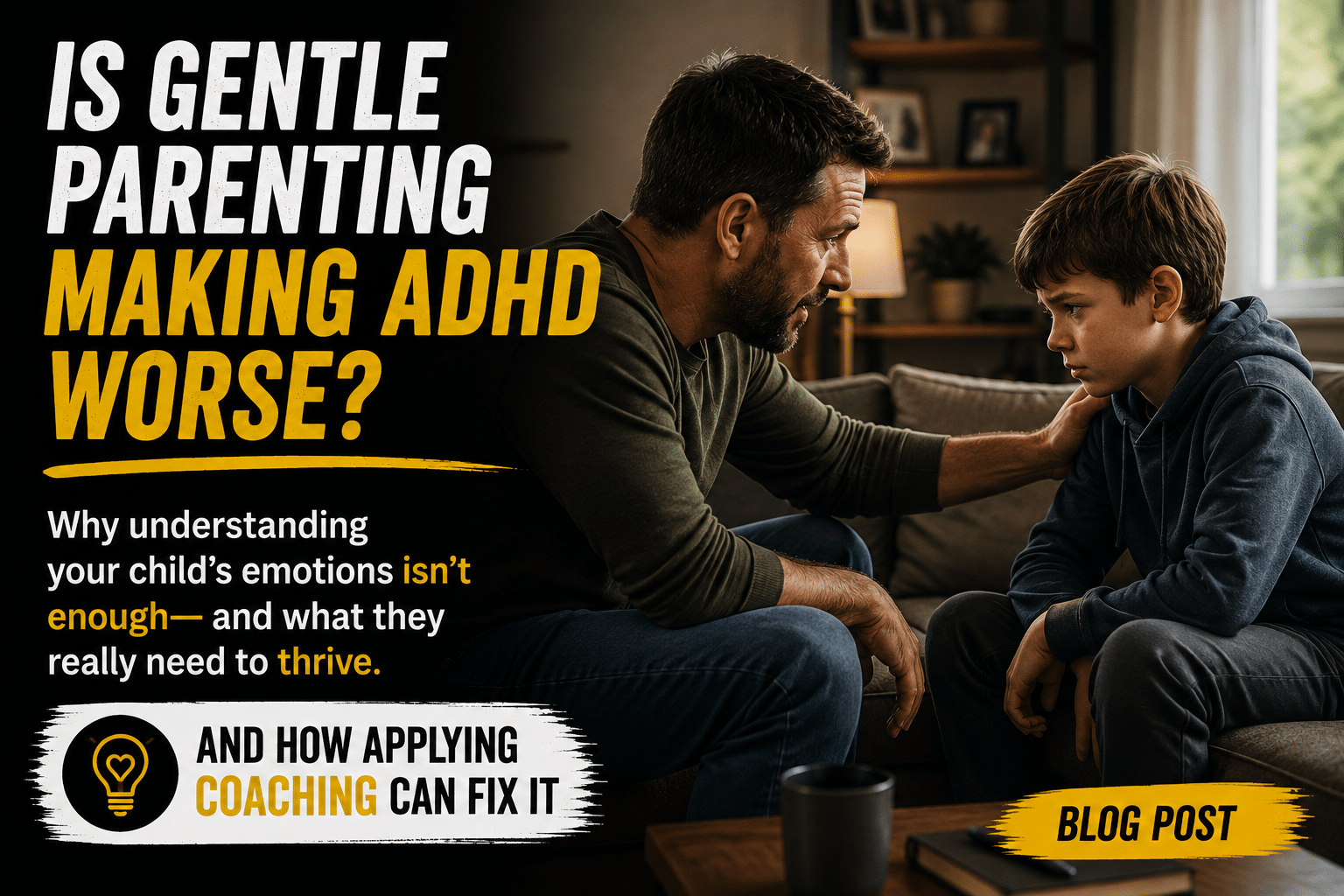
Is Gentle Parenting Making ADHD Worse?
G
entle parenting has become one of the most influential parenting philosophies of recent years. At its heart are ideas that are difficult to argue with: listen to children, take their emotions seriously, maintain connection during difficult moments, avoid unnecessary punishment and help children understand what they are experiencing rather than simply demanding compliance.

First allow me to introduce myself. I’m Matt Flavell, the founder of Boxing Evolution Ltd, where for over 15 years, I’ve dedicated myself to reshaping 1000’s of people’s lives helping them reach their full potential, through the power of boxing, underpinned by teaching the psychology of success and mentorship.
I agree with much of that. Children need empathy, emotional connection and adults who can remain calm when they are struggling. For children with ADHD, who can experience significant difficulties regulating their emotions, those things can be particularly important.
My concern is not that gentle parenting is too kind. My concern is what can happen when understanding a child’s emotions becomes more important than teaching them how to manage those emotions, and when preventing distress gradually becomes confused with developing emotional regulation.
This distinction matters because understanding an emotion and being able to manage it are not the same skill. A child may be perfectly capable of telling you that they are angry because they lost a game, frustrated because their homework is difficult or disappointed because they have been told no. Being able to recognise and describe those feelings is emotional literacy. Being able to experience those same feelings without completely losing control of behaviour is emotional regulation.
Children need both.
What Do We Actually Mean by Gentle Parenting?
One of the difficulties with discussing gentle parenting is that there isn’t a universally agreed definition of what it actually means. The term has largely grown through books, parenting communities and social media rather than emerging as a clearly defined psychological model, which means two parents describing themselves as “gentle parents” may be doing very different things.
That doesn’t make the principles meaningless, but it does mean we should be careful about treating gentle parenting as though it is one specific intervention supported by decades of research. Much of what is described as gentle parenting overlaps with well-established ideas around responsive parenting, emotional coaching and authoritative parenting. The potential problems arise when those principles drift towards permissiveness, excessive negotiation or the removal of ordinary demands whenever a child becomes distressed.
That is an important distinction. There is nothing wrong with validating a child’s feelings. There is nothing wrong with helping a child calm down. There is nothing wrong with making appropriate accommodations for ADHD. The question is whether the way we support the child is gradually increasing their capacity to cope, or whether we are continually changing the environment so that they don’t have to.
For children with ADHD, that distinction becomes particularly important.
ADHD Is About More Than Attention
ADHD is commonly discussed in terms of attention, impulsivity and hyperactivity, but emotional regulation can also be a significant area of impairment. A major review by Shaw, Stringaris, Nigg and Leibenluft examined the relationship between ADHD and emotional dysregulation and concluded that emotional dysregulation is prevalent in ADHD and contributes substantially to impairment.
This is something that becomes very obvious when working practically with children. Often the biggest difficulty isn’t that a child doesn’t understand what they’re feeling. They may know perfectly well that they’re angry because they lost, frustrated because something didn’t work or disappointed because they didn’t get what they wanted. The difficulty is what happens once that emotion appears.
Can they experience frustration without immediately escaping the situation? Can they lose a game without the entire activity collapsing? Can they wait when they want something immediately? Can they hear “no” without entering a lengthy negotiation? Can they make a mistake and try again? Can they experience a strong emotion without that emotion completely determining what happens next?
Those abilities are not simply pieces of information that we can explain to a child. They are skills that have to be developed through repeated experience.
#Key take away: sit amet, consectetur adipiscing elit. Ut elit tellus, luctus nec ullamcorper mattis, pulvinar dapibus leo.
Research shows that fear, stress, and anxiety disorders share the same neural circuitry. By rewiring these circuits through targeted training, it’s possible to reduce fear and build long-term resilience. Read the full study here.
Emotional Literacy Isn't Emotional Resilience
We have become much better at talking to children about feelings, and that is a positive development. Children should have adults who listen to them. They should learn the language to explain what they are experiencing, and they should not be shamed simply because they are angry, anxious, frustrated or disappointed.
But talking about emotions is only part of emotional development. A child being able to say, “I’m frustrated because I lost,” demonstrates emotional awareness. Emotional resilience goes another step and eventually allows the child to think, “I’m frustrated because I lost, I don’t like how this feels, but I can cope with it.”
That second ability cannot be developed entirely through conversation because the child eventually has to experience frustration in order to learn how to function while frustrated. They have to experience disappointment to learn how to recover from disappointment. They have to wait in order to develop greater tolerance for waiting, and they have to occasionally fail in order to discover that failure can be survived and followed by another attempt.
This is where I believe some interpretations of gentle parenting can become counterproductive. We can become so focused on preventing dysregulation that we accidentally prevent children from practising regulation.
Children Cannot Develop Skills They Never Have to Use
The easiest way for me to explain this is through coaching.
Imagine I was teaching a child to box. I could teach them their stance, show them how to move, explain defence and practise individual techniques repeatedly. I could talk for hours about what they should do when somebody throws a punch at them. Eventually, however, another person has to throw a punch.
That doesn’t mean putting a beginner into a ring with an experienced boxer and allowing them to get overwhelmed. Good coaching does the opposite. First we teach the skill. Then we practise it in controlled drills. Then we introduce a small amount of pressure. As the person’s ability develops, we progressively increase that pressure.
The challenge is matched to their current ability.
Parenting can work in much the same way. If a child struggles badly with losing, continually arranging situations in which they never lose might keep them regulated today, but it doesn’t necessarily improve their ability to lose tomorrow. They need manageable opportunities to experience losing while an adult helps them practise what recovery looks like.
If they struggle with waiting, the answer doesn’t necessarily have to be eliminating waiting. It may mean starting with a period of waiting they can realistically manage and gradually increasing it. If they struggle with frustration, they need opportunities to experience manageable frustration without the adult immediately making the frustrating thing disappear.
The aim isn’t to deliberately upset children. The aim is to give them opportunities to discover that they can experience an uncomfortable emotion and come through the other side of it.
Where Gentle Parenting Can Go Wrong
The intention behind gentle parenting is usually compassionate, but compassionate intentions don’t automatically guarantee helpful outcomes. Problems can develop when validation becomes accommodation, support becomes rescuing, co-regulation becomes avoiding dysregulation altogether, or boundaries become negotiations that continue until the child receives an outcome they can emotionally tolerate.
None of those changes necessarily happen deliberately. In fact, they can happen precisely because the parent cares so much about their child’s emotional wellbeing. If every boundary produces an enormous emotional reaction, it is completely understandable that a parent begins looking for ways to prevent those reactions.
The problem is the lesson the child may unintentionally learn.
If difficult situations are repeatedly changed or removed when distress appears, the child may have fewer opportunities to discover that they are capable of tolerating the distress itself. Instead of gradually developing the belief that “this feels difficult, but I can handle it,” they can become increasingly dependent on somebody else changing the situation whenever something feels difficult.
This does not mean refusing reasonable ADHD accommodations, deliberately provoking children or expecting a child with ADHD to cope with demands they genuinely cannot manage. The important word is manageable. Challenge needs to be appropriate to the child’s current capacity, but there still needs to be some challenge.
Think Like a Coach, Not a Rescuer
A good coach doesn’t watch somebody struggle and immediately remove whatever they’re struggling with. They assess what the person can currently manage, provide enough support for them to stay engaged, allow recovery when necessary and then progressively increase the challenge as their ability develops.
This is essentially the same principle used throughout physical training. If somebody has never lifted weights before, I wouldn’t put 150 kilograms on a bar and tell them to squat it. That isn’t training; it’s overwhelming them. But I wouldn’t conclude that because lifting weights feels difficult, the solution is to remove all the weights either.
I would find the appropriate starting point.
We can apply the same thinking to emotional regulation. A child who currently becomes extremely distressed after waiting for thirty seconds probably isn’t ready to wait twenty minutes. But there is a huge amount of space between twenty minutes and no waiting at all. Perhaps we start with one minute, help them through it and gradually build from there.
The objective isn’t distress. The objective is increased capacity.
What Does the ADHD Research Tell Us?
This emphasis on active skill development fits reasonably well with the evidence around behavioural parenting interventions for ADHD. A systematic review and meta-analysis by Coates, Taylor and Sayal examined parent-administered behavioural interventions and found that parenting interventions were associated with reductions in ADHD symptoms across the included studies.
Behavioural Parent Training does not simply teach parents to understand ADHD better. It changes how adults respond to behaviour, how expectations are communicated, how desired behaviours are reinforced and how the environment is structured. Research in community settings has also found improvements in child functioning and parents’ confidence in managing behaviour following behavioural parent training.
There is also evidence suggesting that emotional coaching and behavioural strategies do not need to be competing philosophies. One randomised trial involving hyperactive preschool-aged children combined parenting strategies for managing behaviour with emotion-socialisation strategies intended to improve children’s emotional regulation. The intervention produced improvements in reported ADHD-related behaviours, emotional lability and parenting practices compared with the control condition.
That combination is important because it reflects what I believe is missing from a lot of the online debate about parenting. We don’t need to choose between understanding children’s emotions and teaching behavioural skills. We can do both.
Gentle Doesn't Have to Mean Permissive
The parenting debate is often presented as though there are only two options. Either we practise gentle parenting and remain emotionally responsive, or we return to an authoritarian model where adults demand obedience and children are punished for expressing emotions.
There is a huge amount of space between those positions.
A parent can acknowledge that their child is furious about having to turn off a game while still requiring the game to be turned off. They can empathise with how difficult losing feels while still allowing the child to lose. They can understand that waiting is particularly difficult for a child with ADHD while still gradually helping that child become better at waiting.
The feeling doesn’t have to change the boundary.
That is one of the most important differences between emotional validation and behavioural accommodation. I can understand why you’re angry without making the thing you’re angry about disappear. I can recognise that something is difficult for you while still believing you are capable of developing the skills to manage it.
In fact, sometimes continually removing a challenge communicates something very different from empathy. It can unintentionally communicate that we don’t believe the child can cope with it.
Co-Regulation Should Eventually Lead Somewhere
Co-regulation is an important part of childhood development. Children initially rely heavily on adults to help organise their emotions and behaviour, and children with ADHD may require that external support for longer or in more situations.
But co-regulation should have a developmental direction.
The long-term objective cannot be a teenager or adult who can remain regulated only when everybody around them carefully manages the environment to prevent uncomfortable emotions. The purpose of external regulation is gradually to help build greater internal regulation.
At first, the adult may provide most of the structure. The parent notices the child’s frustration, reminds them what to do and helps them recover. Over time, the child begins recognising the feeling themselves. Eventually they begin using the strategy with less prompting, and ultimately the hope is that they can manage similar situations independently.
That transition won’t happen perfectly or in a straight line. Children will still have bad days, and ADHD means some areas of regulation may remain more difficult than they are for other people. But independence should remain the direction of travel.
Resilience Requires Experience
Resilience is sometimes discussed as though it is something we can give children through reassurance. Reassurance can certainly help, but resilience is also built through experience.
A child learns that losing is survivable partly by losing and recovering. They learn that frustration passes partly by experiencing frustration and remaining in the situation long enough for it to pass. They learn that failure isn’t catastrophic by failing, recovering and trying again.
Research into parenting programmes more broadly supports the idea that parenting practices can influence children’s behavioural and emotional development. A Cochrane review of group-based parenting programmes found evidence of improvements in aspects of children’s emotional and behavioural adjustment and parent-child interaction, although the authors also emphasised limitations in the quality of the evidence.
None of this means we should manufacture unnecessary hardship for children. There is no developmental prize for making childhood deliberately miserable. What it does mean is that we should be careful about treating every experience of discomfort as something adults need to remove.
There is an important difference between struggle and harm.
Frustration isn’t automatically harmful. Disappointment isn’t automatically harmful. Losing isn’t automatically harmful. Waiting isn’t automatically harmful. Finding something difficult isn’t automatically harmful. These are ordinary human experiences, and our children will eventually encounter all of them whether we want them to or not.
Keep the Empathy and Add the Coaching
My criticism of gentle parenting therefore isn’t an argument for becoming less gentle. It’s an argument for being clearer about what our ultimate goal is.
Keep listening to your child. Keep helping them understand their emotions. Keep the connection. Keep the empathy. Stay calm when they’re struggling and make reasonable accommodations where they genuinely need them.
But add expectations. Add boundaries. Add opportunities to practise difficult skills. Add manageable frustration. Allow children to experience disappointment without immediately fixing it. Allow them to fail safely and then help them work out what they can do next.
Most importantly, don’t judge every parenting decision according to whether it keeps your child regulated in that particular moment. Sometimes successful parenting means helping a child remain calm, but sometimes it means staying calm yourself while your child experiences an emotion they need to learn how to manage.
That is the difference between simply regulating the environment and developing the child.
The Goal Isn't a Child Who Never Struggles
Ultimately, the goal of parenting isn’t to produce a child who never struggles. That isn’t realistic, and I’m not convinced it would even be desirable.
The goal is a child who increasingly encounters something difficult and can think, “I don’t like how this feels, but I can handle it. I’ve experienced this before. I know what to do next.”
For a child with ADHD, reaching that point may take more repetition, more external structure, more patience and more support. Their starting point may be different and their progress may not be linear. But the principle remains the same.
We don’t develop emotional regulation by ensuring children never need to regulate. We develop it by giving them appropriate opportunities to experience emotions, practise responses, recover when things go wrong and try again.
So perhaps the question we need to ask isn’t, “How do I stop my child becoming dysregulated?”
A more useful question may be, “How do I progressively teach my child what to do when dysregulation happens?”
That is where I think the best parts of gentle parenting can be retained while something crucial is added: coaching.
Not gentle or challenging.
Gentle and challenging.
Because resilience isn’t something we can simply explain to children. It’s something we help them develop through experience.
How To Transform Your Challenging ADHD son into a focussed calm kid... without harsh discipline or relying solely on medication
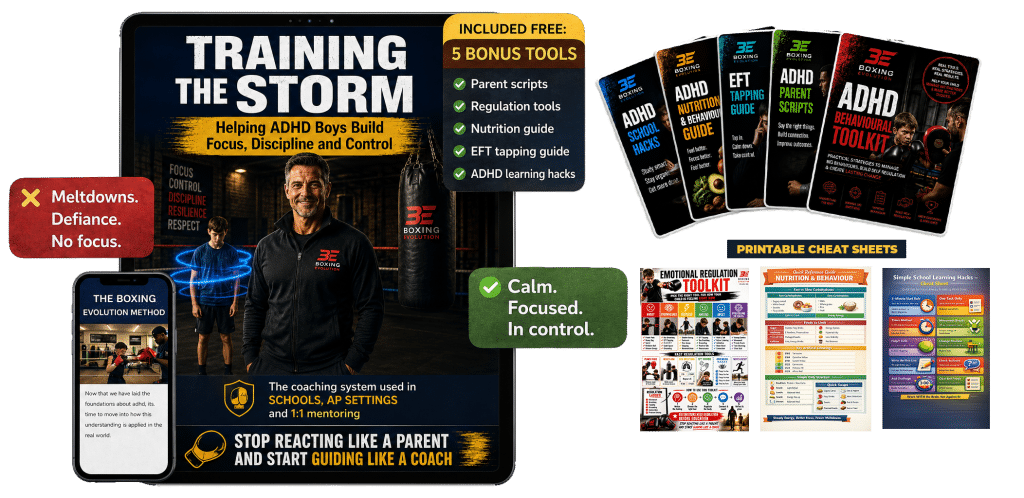
TRAINING THE STORM
A Powerful Boxing-Based ADHD Parenting Guide
Inside the guide you will discover:
- How sports coaching principles transform parenting — Apply leadership, structure and skill development instead of constantly reacting to behaviour..
- The unconscious ways parents surrender leadership authority — Discover the everyday patterns that accidentally put your child in control of the dynamic.
- Why emotional regulation is the real battleground in ADHD — Understand what drives meltdowns, defiance and seemingly irrational behaviour.
- How to train emotional regulation — Practical coaching tools to help your child handle frustration, setbacks and strong emotions.
- How to set boundaries without becoming harsh or controlling — Lead with calm authority while reducing arguments, negotiation and power struggles.
- What to do in the moment when things kick off — Simple strategies and scripts for responding without getting dragged into the chaos.
- Why consequences alone often fail with ADHD — Learn when behaviour needs correcting and when the underlying skill needs developing.
- And much, much more — From school and nutrition strategies to communication, emotional regulation and practical tools for everyday ADHD life.
If you’re tired of “quick fixes”, constant battles and parenting advice that doesn’t seem to work with ADHD, then Training the Storm gives you a different approach.
STOP REACTING LIKE A PARENT AND START GUIDING LIKE A COACH
Think of Training the Storm as your parenting coaching blueprint: helping you understand what drives ADHD behaviour, reclaim your leadership role, and apply proven coaching principles to develop emotional regulation, focus, resilience and self-control.
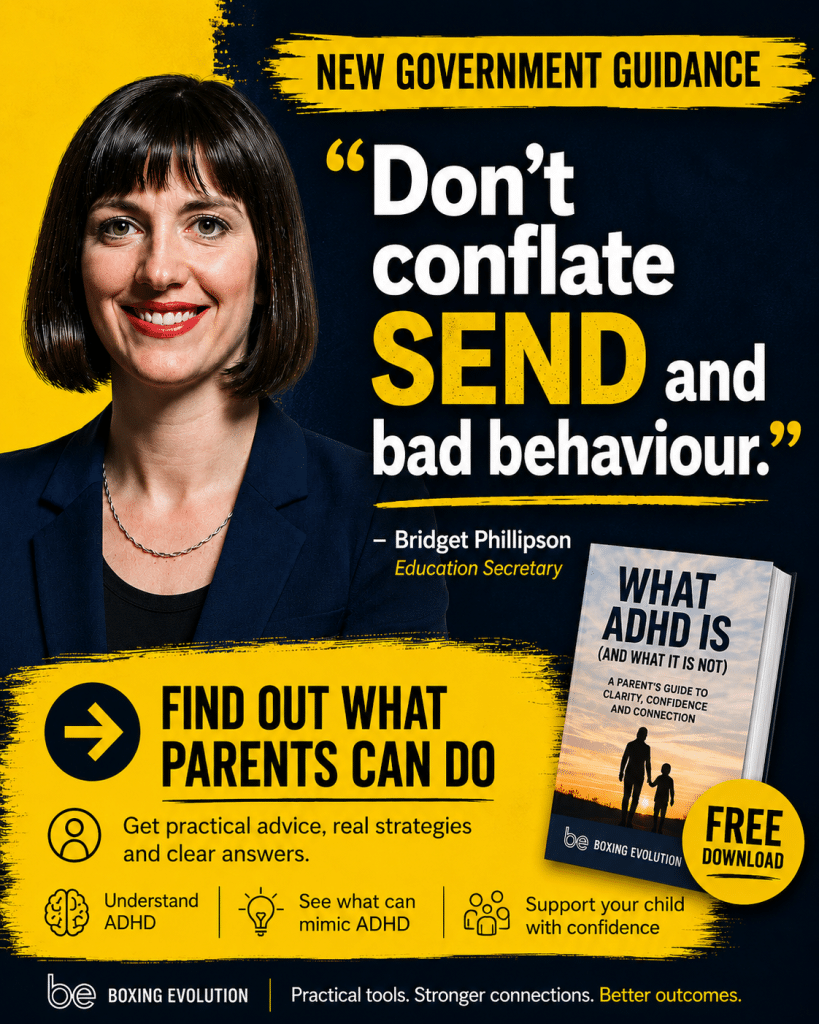
DOWNLOAD THE FREE PDF BY REGISTERING BELOW.
WANT TO GET FIT AND LOSE WEIGHT BUT DON'T KNOW WHERE TO START?
Check out our 5 day 1000 punch free challenge. Filled with lots of fitness, mindset and nutrition tips that can be implemented straight away making get started with your transformation journey simple and easy!

5 reasons your mindset is killing your potential
LEARN ABOUT THE HIDDEN MENTAL BLOCKS HOLDING YOU BACK!

DOWNLOAD THE FREE PDF BY REGISTERING BELOW.

As a regular player from Chile I can confidently say this site nails the local gaming experience. Payment methods are tailored perfectly and the support team understands the region well. The promotional calendar is packed with exciting events throughout the month. I recommend it to anyone looking for quality entertainment. orobetchile