A Powerful Boxing-Based ADHD Parenting Guide
TRAINING THE STORM
How To Transform Your Challenging ADHD son into a focussed calm kid... without harsh discipline or relying solely on medication
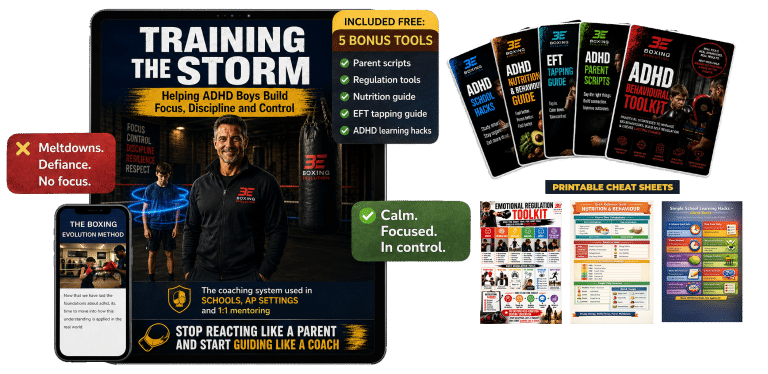
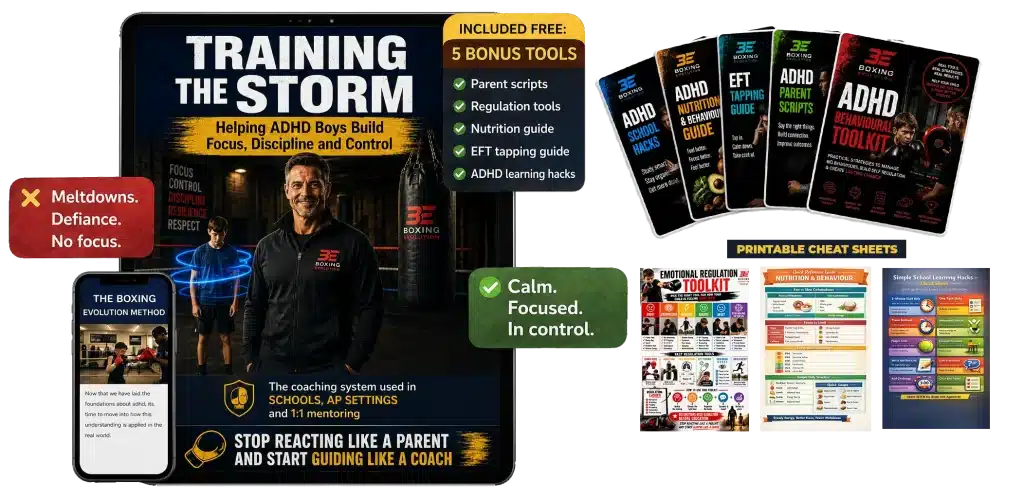
Stop Reacting Like A Parent And Guiding Like A Coach!
Rated highly by parents of ADHD boys
Available in EPUB and printable PDF formats.
ONLY £9.99!
Backed By Our 30-Day Money Back Guarantee

WHAT IS TRAINING THE STORM?
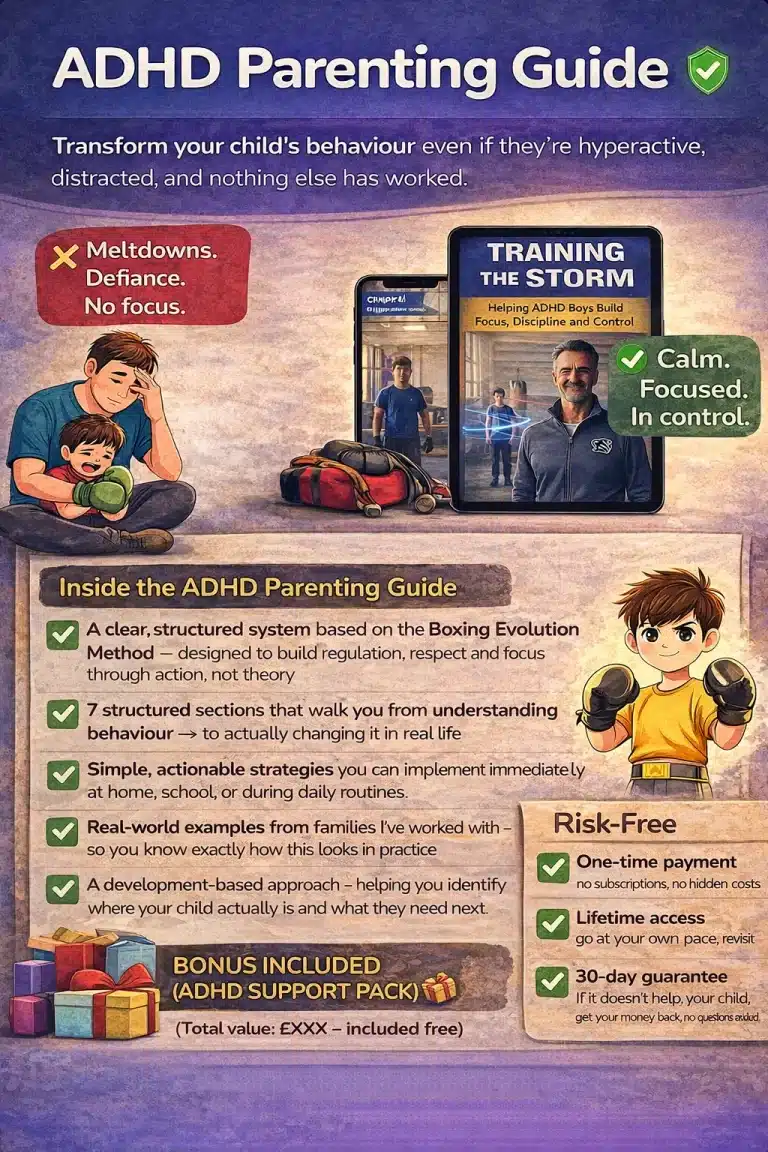
The Training the Storm guide is a practical, action-based system for helping your child develop focus, emotional control, and discipline — built on a combination of neuroscience, developmental understanding, and real-world coaching experience.
Created by myself Matthew Flavell — ADHD specialist, boxing coach, and founder of Boxing Evolution Alternate Provision — this method has been used to support thousands of children in schools, AP settings, and 1:1 mentoring, helping families turn chaos into structure, and structure into calm.
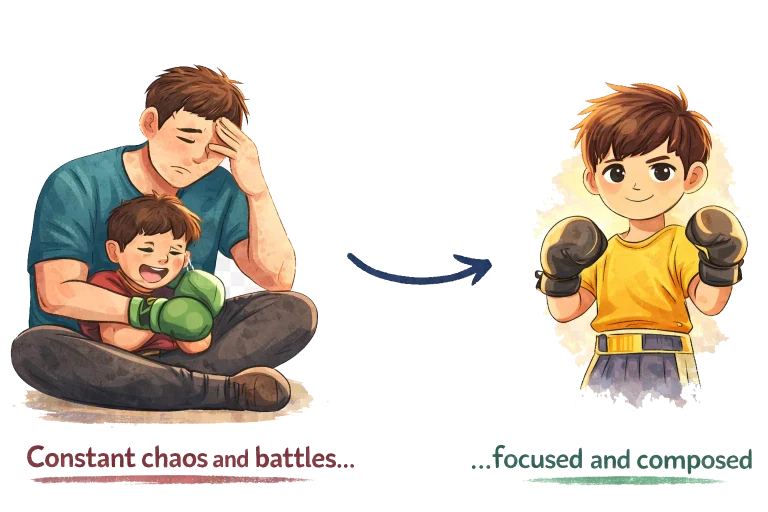
Rather than relying on theory alone, this guide shows you how to use movement, leadership, and simple daily strategies to work with your child’s brain — not against it — so change actually sticks.
Designed to be implemented in short, manageable daily steps, the system fits into real life, giving you tools you can apply immediately without overwhelm.
Your child will begin to focus for longer, regulate emotions more effectively, and respond with greater control — while you feel calmer, more confident, and back in control of the environment you’re leading.
ONLY £9.99!
Backed By Our 30-Day Money Back Guarantee
Training the Storm is a Proven SYSTEM for Building
Focus, Discipline, and Emotional Control
Over the years, I’ve worked with thousands of parents who come to me thinking they’ve tried everything… and still feel like nothing is working.
They’ve read the books, followed the advice, spoken to schools — and yet they’re still dealing with constant battles, daily complaints, and ongoing struggles at home.
What I hear again and again is:
“Nothing seems to work.”
And underneath that… something heavier.
Parents feeling overwhelmed, exhausted, and quietly questioning themselves.
They’re trying their best, but the situation keeps escalating.
Tension builds in the home. Arguments become more frequent. Patience runs thin.
What should feel like normal family life starts to feel like something you have to get through rather than enjoy.
And over time, many parents reach a point where it feels like they’re constantly firefighting problems… with no real solution in sight.
But for many families, there’s another layer to all of this…
Because just as things are becoming overwhelming, they’re also being told to wait.
Wait for assessments.
Wait for a diagnosis.
Wait for school support.
Wait for an EHCP that may take months — sometimes years — to actually come into place.
And in the meantime… nothing pauses.
The behaviour doesn’t stop.
The pressure doesn’t ease.
The challenges at home are still there, every single day.
So you’re left trying to manage everything without the support you’ve been told is coming.
Trying to hold things together while navigating a system that moves far slower than real life does.
And that gap — between what your child needs right now, and what’s actually available — becomes one of the most stressful parts of the entire experience.
That’s usually when they come to me.
Not because they don’t care — but because they care so much and need something that actually works in real life.
So I set out to develop a different approach.
One based not just on theory, but on what I’ve seen work time and time again with children in schools, alternative provision, and 1:1 coaching environments.
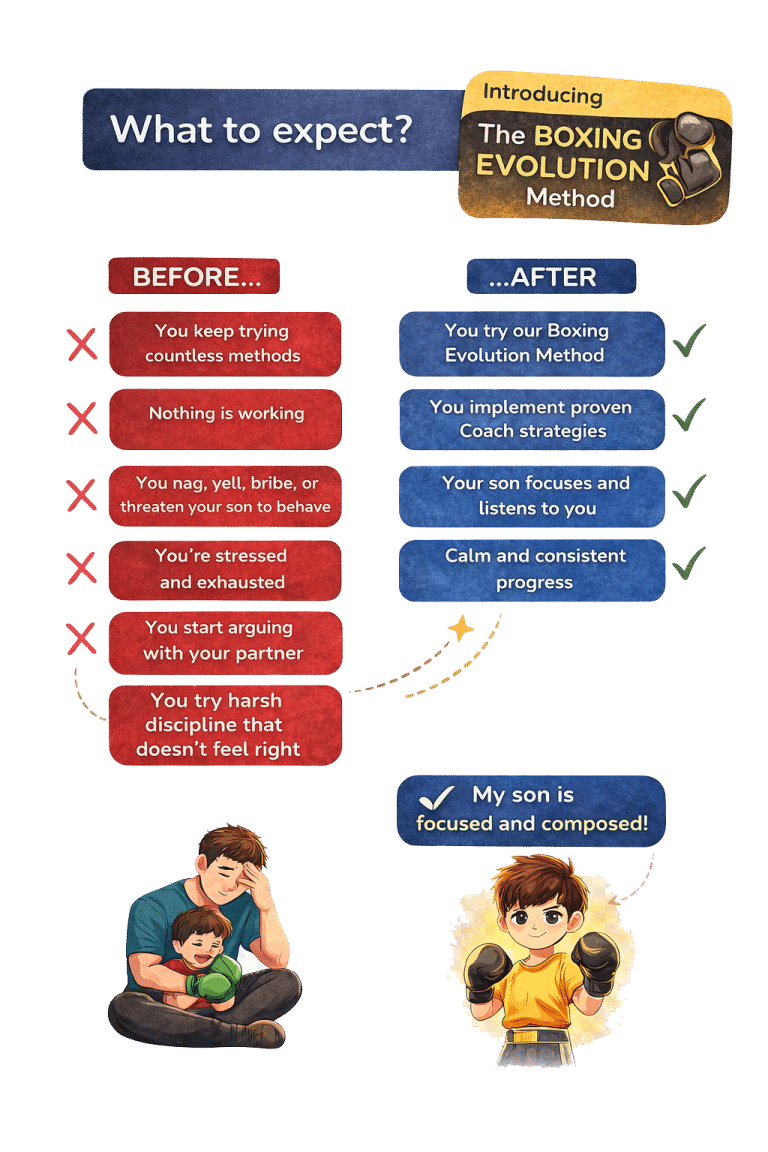
A system built around simple, effective tools that help you manage behaviour, build regulation, and create structure — without relying solely on medication or constant punishment.
And because I know how overwhelming this can feel, I’ve broken everything down into a clear, step-by-step plan that’s easy to follow and fits into real life.
You don’t need hours each day.
You just need the right approach, applied consistently.
This is the same system I now use with families, schools, alternative provision settings, and mentoring programmes to help children build focus, emotional regulation, confidence, and discipline in the real world.
Below, you’ll see short clips from seminars and educational workshops where I explain key parts of the Boxing Evolution Method.
These include relationship building, engagement, and why boxing is such a powerful tool for helping children regulate emotions, build confidence, and reconnect with learning.
Continue reading to see exactly how it works.
ONLY £9.99!
Backed By Our 30-Day Money Back Guarantee
One of the experiences that shaped my understanding of ADHD family dynamics came from working closely with a mother raising three boys, one of whom had ADHD.
Before I continue, I want to make one thing very clear. This mum loved her boys deeply and devoted herself completely to them. She worked hard, cared endlessly, and genuinely wanted the best for her children.
But over time, I also began to realise that in constantly putting their needs first, she had slowly lost control of the emotional leadership structure within the household itself.
Not long into working with her, I received a distressed phone call from her. She was in tears, emotionally exhausted, and telling me she simply could not cope anymore.
The boys were running wild around the house, arguing constantly, shouting over one another, refusing to listen, and every attempt to regain control seemed to make the situation worse.
I offered to come round and see for myself what was going on, and it did not take me long to start recognising the deeper problems underneath the behaviour.
The entire environment of the home had gradually become built around keeping them happy, rather than leading the household with structure and stability. The television in the living room had effectively become dominated by Xbox games.
As time went on, I started recognising patterns within the environment that were unintentionally reinforcing the chaos and emotional dysregulation within the household…
Toys and distractions covered the house. The boys had free access to junk food and snacks. Dinner times had become emotionally draining battles filled with interruptions, arguments, shouting, and frustration.
What stood out most to me, however, was how emotionally reactive everything had become.
The middle child, who had ADHD, was often the emotional catalyst within the household. Like many ADHD boys, he struggled with impulsiveness, frustration, emotional regulation, and overstimulation.
When he became frustrated or emotionally triggered, the atmosphere in the house could change within seconds. Small disagreements would escalate into arguments. His brothers would react back to him.
His mother, already burnt out from working long shifts and coming home exhausted, would get pulled emotionally into trying to regain control of the situation, and before long the entire household would descend into chaos.
What became increasingly clear to me was that the ADHD behaviour could not be viewed in isolation from the family dynamic surrounding it.
Everything was feeding into everything else.
The emotional exhaustion of the parent, the overstimulation in the environment, the chaos at dinner times, the lack of structure, the emotional reactions during conflict, the inconsistent boundaries between discipline and reward — all of it contributed to an emotionally dysregulated household.
And the more emotionally chaotic the environment became, the more dysregulated the ADHD behaviour became alongside it.
One of the first things I suggested to her was that the solution did not start with trying to control the child more aggressively. It started with the parent reclaiming emotional leadership within the household.
The boys did not need less love.
They needed more structure, more consistency, calmer leadership, and an environment that felt emotionally stable instead of emotionally reactive. So rather than constantly firefighting behaviour after emotional explosions happened, we started changing the emotional structure of the home itself.
Simple changes were implemented straight away.
The boys started helping clean up after dinner by scraping their plates and rinsing them in the sink. She stopped unintentionally rewarding bad behaviour with treats moments after emotional outbursts.
Toys and activities that created excessive chaos were put away until appropriate times instead of being constantly available. With the older boy especially, I encouraged her on giving him more responsibility and helping him feel important in healthier ways through practical tasks around the house and garden.
At the same time, I also worked closely with the middle child to help him gradually develop better emotional regulation and self-control.
One of the biggest breakthroughs came through boxing-style training and behavioural exercises.
Rather than simply punishing emotional explosions after they happened, I focused on helping him become more aware of what was happening internally before he reached that point.
Through physical training, breathing control, movement exercises, emotional check-ins, and self-regulation drills, he slowly started learning to recognise when his frustration and anger were building instead of only becoming aware once he had already lost control.
He began understanding that feeling angry was not the real problem. The important thing was learning what choices he made in those moments.
Over time, improvements started to appear, where he would pause before reacting. Times where he would walk away instead of escalating an argument further. Moments where he would recognise his temper building and consciously try to calm himself down before things spiralled out of control.
At the same time, as the environment within the household became calmer and more structured, the emotional intensity of the home also started reducing.
Dinner times became less chaotic. Arguments became less frequent. Boundaries became clearer. His mother became calmer, more confident, and less emotionally reactive, which in turn helped the boys become calmer too.
One of the biggest lessons I learned from the experience was that ADHD behaviour is rarely just about the child alone.
Children are deeply affected by the emotional systems surrounding them.
When the household environment is constantly chaotic, reactive, emotionally unstable, and overstimulating, ADHD behaviours often become amplified.
But when parents begin creating calmer structure, stronger emotional leadership, healthier routines, and active coaching around emotional regulation, the entire family dynamic can begin to change.
That experience became one of the foundations for the approach I teach throughout this book.
Learn How To Stop Reacting Like A Parent And Guiding Like A Coach!
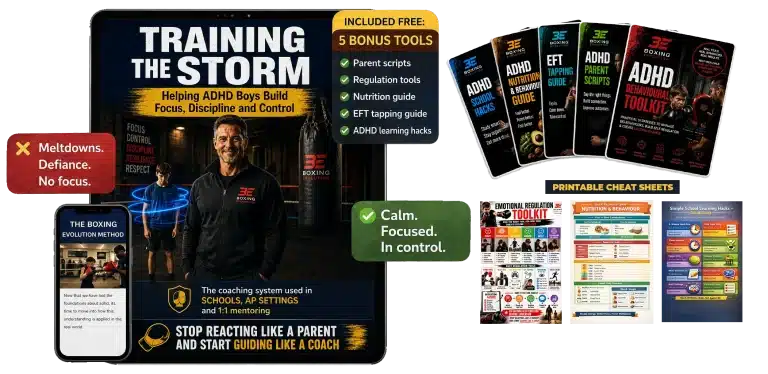
Practical tools you can use while waiting for assessment or diagnosis
ONLY £9.99!
Backed By Our 30-Day Money Back Guarantee
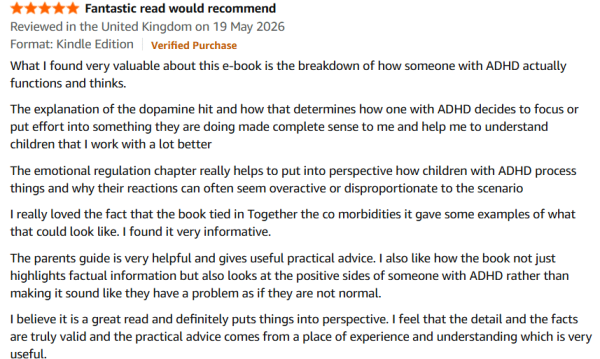
Rated highly by parents of ADHD boys
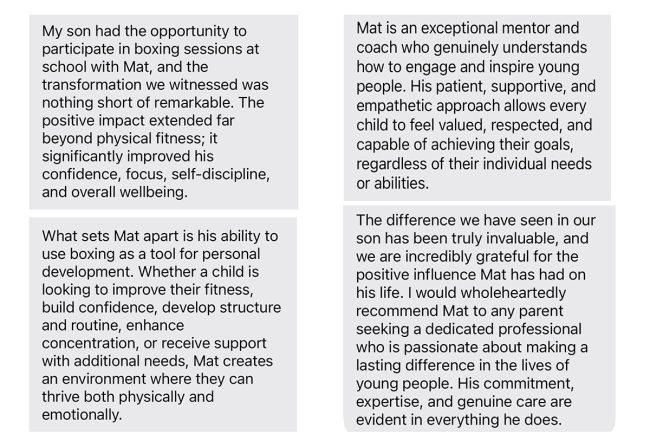
Here’s What This Means For Your Family…
- Your ADHD child will become more cooperative and responsive to direction. No more constant repeating yourself, no more daily battles. Everyone enjoys more peaceful interactions.
- You'll start looking forward to homework time, knowing your child will actually sit down and focus. (No more hours of frustration and tears!)
- You’ll stop feeling overwhelmed, out of energy, or like a failure as a parent. This is how I felt when I was struggling with my son's ADHD… But by the time you've read this book, you'll have all the tools to help your child thrive, and you'll feel confident and in control again.
- You'll have more energy for yourself and your relationships. ADHD parenting stress won't dominate your life anymore.
- Your child will start building real friendships. Learn how to help your ADHD child navigate social situations and stop being "that kid" nobody wants to play with.
- Your child will start benefiting from improved focus and behavior. Better focus helps with school performance, social relationships, and builds the foundation for future success!
Disclaimer: Training the Storm is designed to provide practical coaching tools and behavioural strategies for parents navigating ADHD-related challenges. It is intended to complement — not replace — appropriate medical, psychological, or therapeutic support where required.
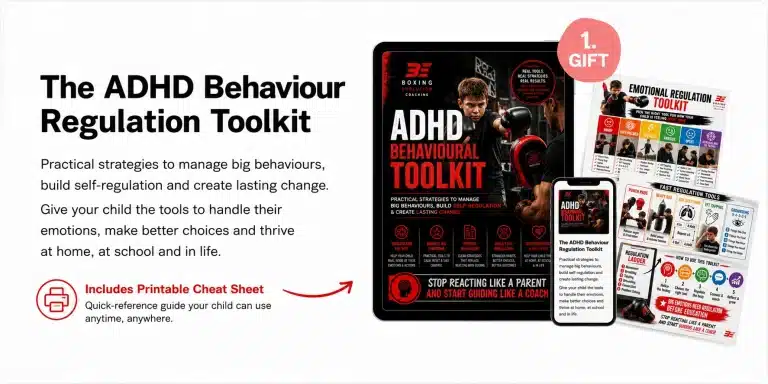
Here’s everything You’re Getting PLUS The FIVE FREE GIFTS (£100 Total Value)
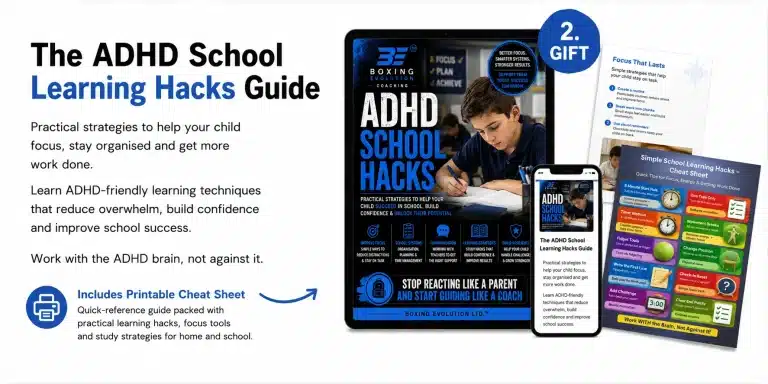

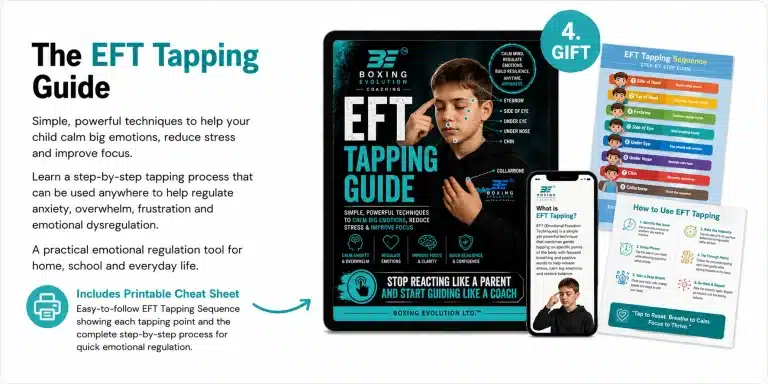
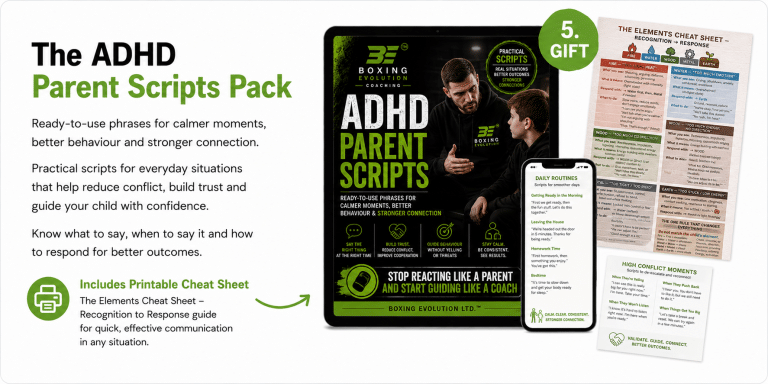
ONLY £9.99!
Backed By Our 30-Day Money Back Guarantee
MEET THE COACH
I’m Matthew Flavell — ADHD specialist, boxing coach, mentor, and founder of Boxing Evolution coaching.
Through my work, I’ve helped thousands of young people and families develop focus, discipline, and emotional control using a method that combines movement, psychology, and mentoring.

Why You Can Trust This Approach
This isn’t based on theory alone.
It’s built from over 20 years of real-world coaching experience, working directly with children, families, and schools — helping them move from chaos, conflict, and frustration… to structure, control, and progress.
But more importantly…
This is something I understand from the inside.
I was diagnosed with ADHD myself.
I struggled with impulsivity, emotional reactions, lack of focus, and difficulty fitting into the school system — often misunderstood as “bad behaviour” rather than something that needed the right kind of support.
I know what it feels like to be:
- constantly in trouble
- labelled as difficult
- misunderstood by teachers
- and stuck in a system that doesn’t adapt
Because I lived it.
And like many of the children I now work with, that path led to:
- anger
- poor decisions
- and nearly going completely off track
Until something changed.
THE TURNING POINT
That change came through boxing.
Not just as a sport — but as a structured system for developing discipline, control, and self-belief.
It gave me:
- focus
- direction
- emotional control
- and a way to channel energy positively
And that’s what eventually became the foundation of everything I teach today.
From Experience to Proven Method
After years of coaching, mentoring, and working within schools and alternative provision, I began to see the same pattern again and again:
👉 Traditional approaches weren’t working
👉 Punishment alone didn’t change behaviour
👉 Talking didn’t translate into action
So I developed a different system.
One that works with how these children actually think, feel, and behave.
A system that uses:
- movement to regulate the body
- structure to create clarity
- leadership to build respect and consistency
Not just in theory — but in real, day-to-day situations.
Why This Matters for You
This means you’re not just getting advice.
You’re learning a system that has been:
- Applied in real environments (homes, schools, AP settings)
- Tested with children who struggle with focus, behaviour, and emotional control
- Refined through years of hands-on coaching and mentoring
This is what I use with families every day.
And now — it’s what you’re about to learn.
ONLY £9.99!
Backed By Our 30-Day Money Back Guarantee

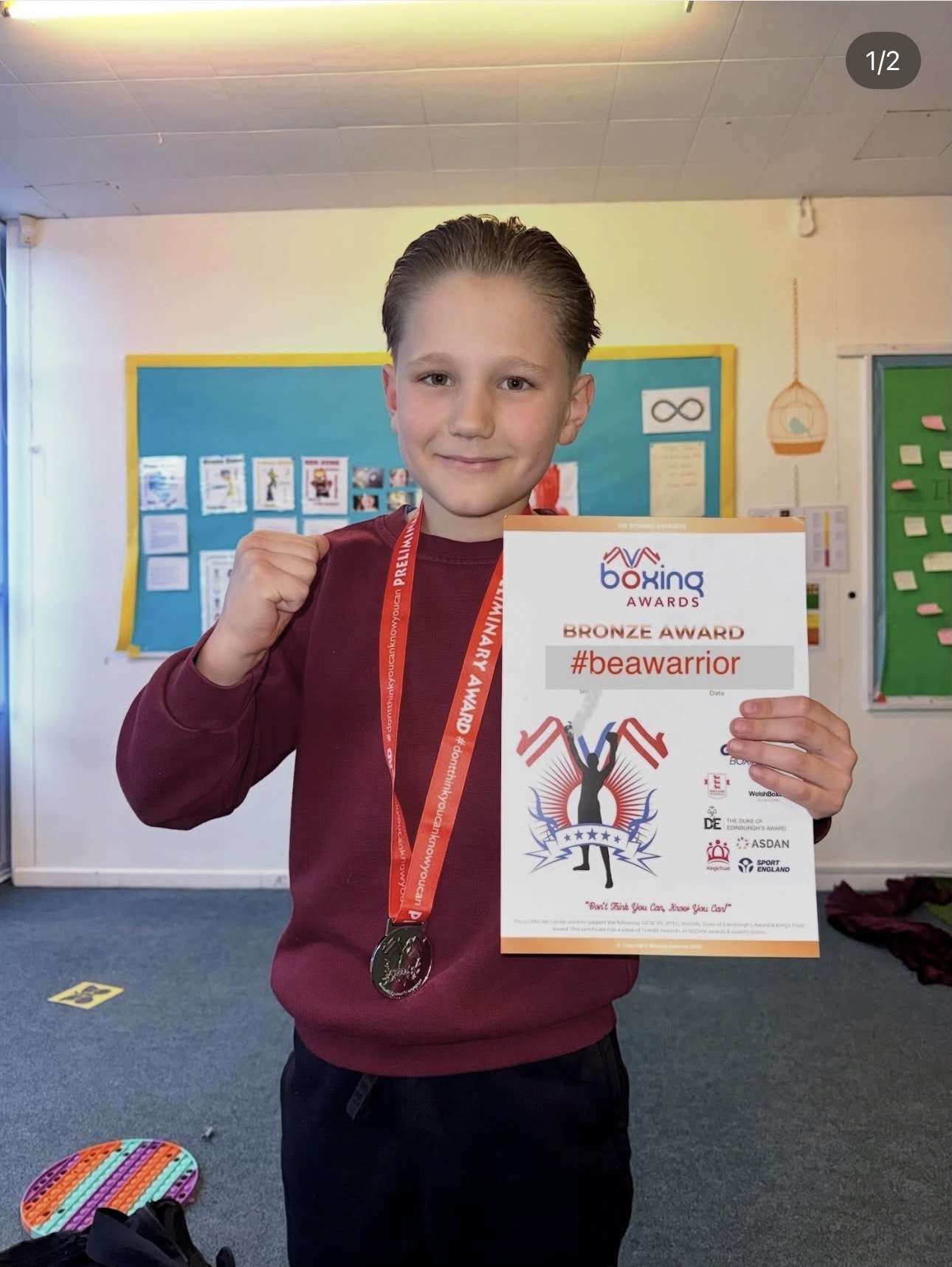
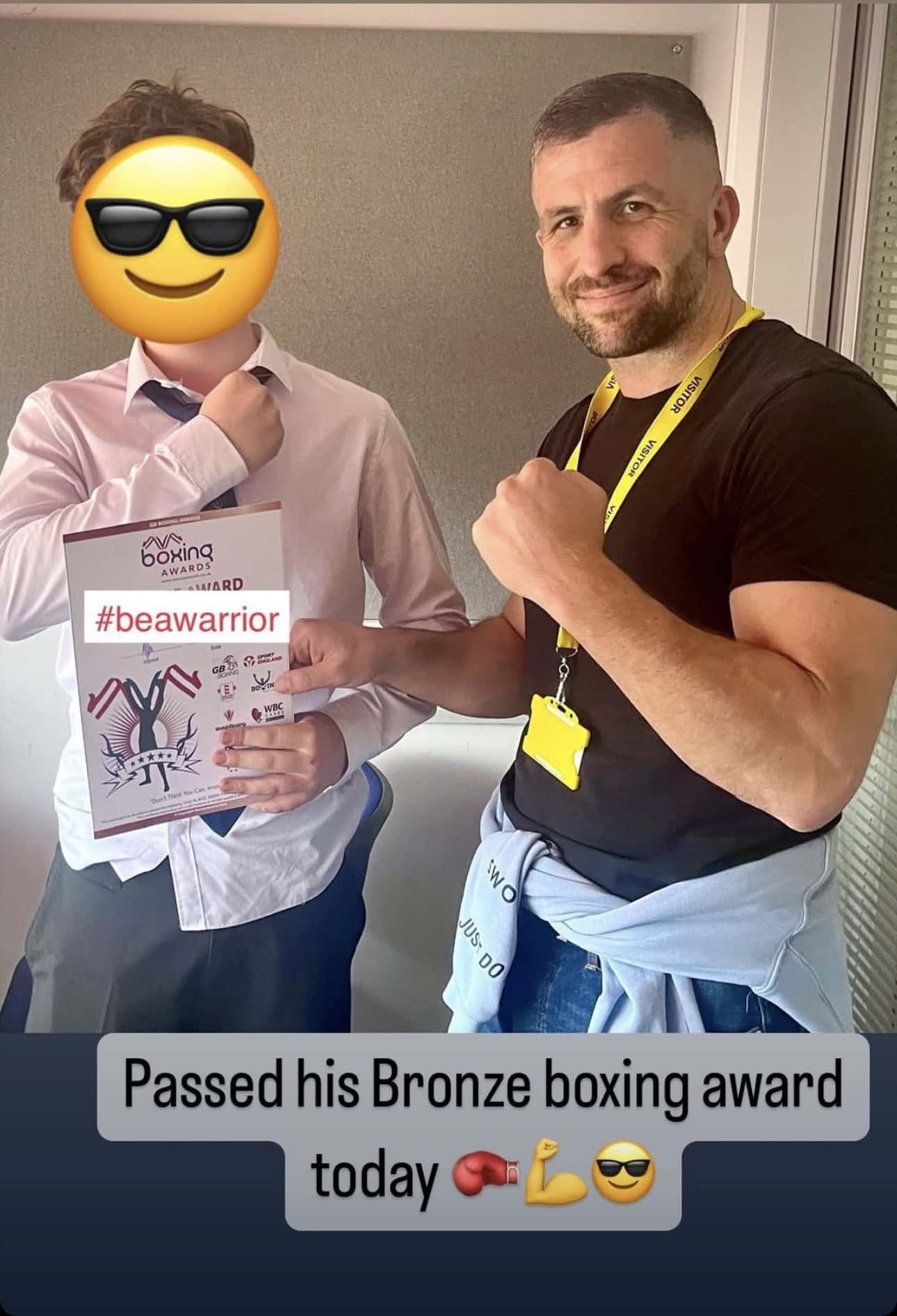
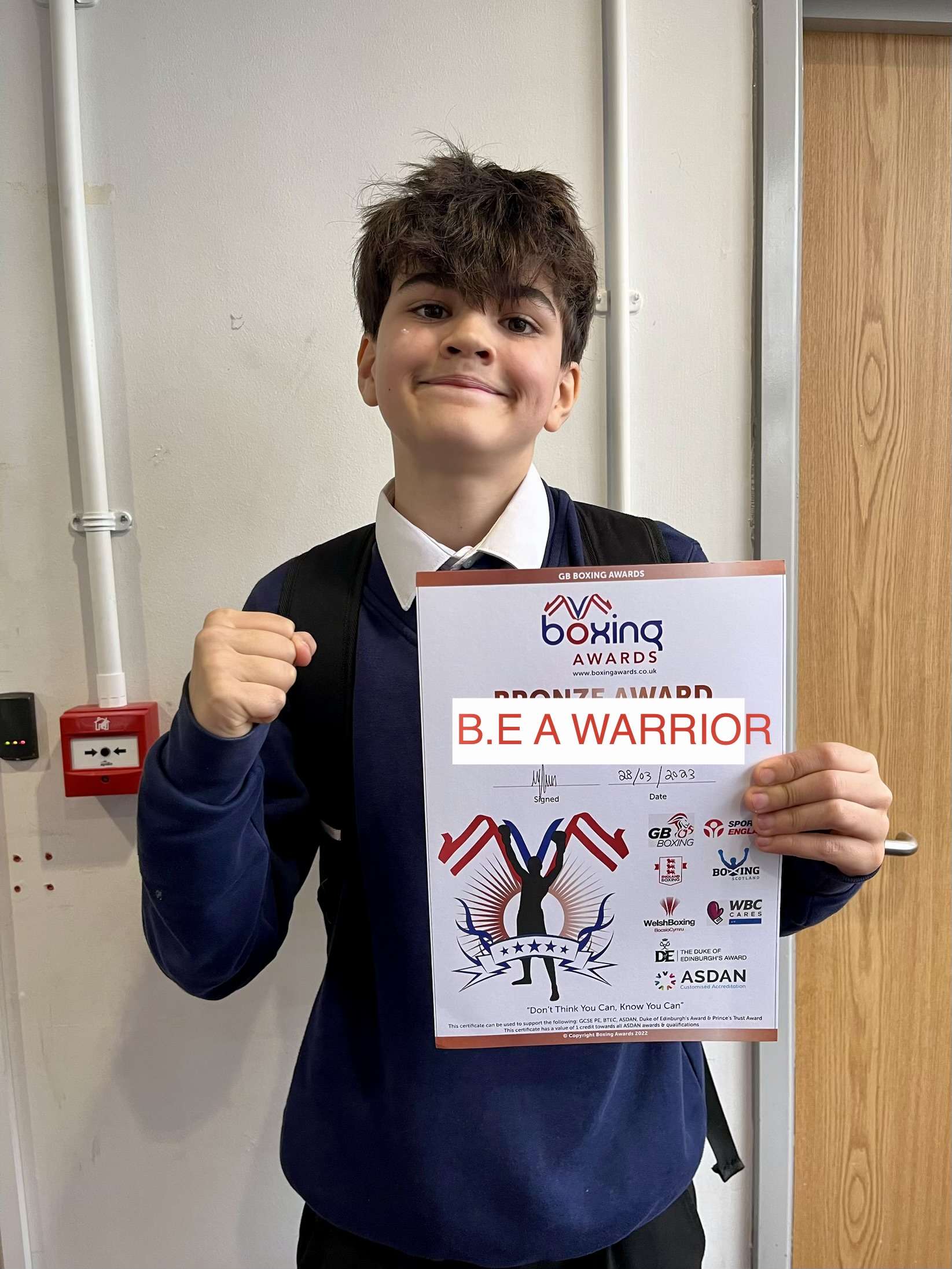
Here’s How My Method Has Helped Over 1000’s of Families Transform Chaos Into Calm…