
Alternate provision
EOTAS Reform: My Response to the DFE's SEND Consultation
Why Early Intervention Needs Clear Thresholds and Fair Commissioning
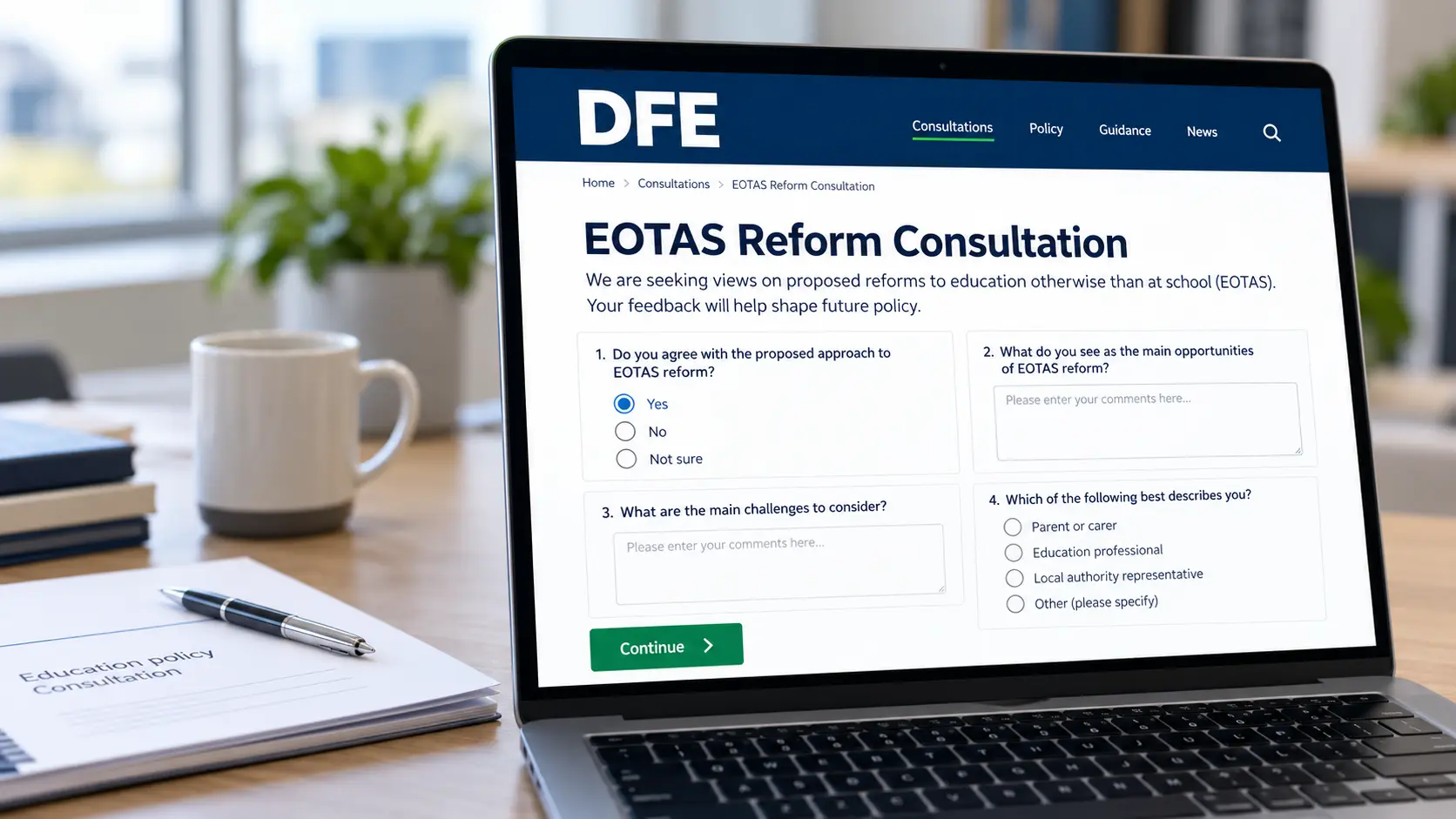
EOTAS reform offers an important opportunity to improve support for children and young people who cannot access education successfully within a school or further education setting. However, reform will only work if it addresses what happens before needs escalate: how difficulties are identified, what threshold triggers action, who is responsible, how support is funded and how suitable providers are commissioned.
On 18 September 2026, Boxing Evolution Alternate Provision submitted a response to the Department for Education’s consultation, SEND reform: education otherwise than at school. We responded as a non-school alternative provision provider with frontline experience supporting children and young people with ADHD, SEND and social, emotional and mental health needs.
Our central position was simple:
“Early intervention cannot reduce costs, pressure on waiting lists or demand for specialist provision unless it is supported by clear thresholds, defined responsibilities, accessible funding and a transparent commissioning pathway”.
This article sets out the main principles behind our consultation response and what we believe national and local reform must get right.

First allow me to introduce myself. I’m Matt Flavell, the founder of Boxing Evolution Ltd, where for over 15 years, I’ve dedicated myself to reshaping 1000’s of people’s lives helping them reach their full potential, through the power of boxing, underpinned by teaching the psychology of success and mentorship.
What is EOTAS?
Education Otherwise Than At School, commonly known as EOTAS, is a specific legal arrangement under section 61 of the Children and Families Act 2014. A local authority may arrange for special educational provision within an Education, Health and Care Plan to be delivered outside a school or further education setting where it would be inappropriate for that provision to be delivered in such a setting.
EOTAS is not the same as elective home education. It is also distinct from alternative provision arranged under section 19 of the Education Act 1996 for compulsory-school-age children who would otherwise not receive suitable education because of illness, exclusion or another reason.
In practice, both EOTAS and alternative provision can involve a combination of tuition, online education, therapeutic support, mentoring, vocational activity and specialist non-school providers. The Department for Education’s consultation therefore considered EOTAS alongside health-related alternative provision and accredited online education.
The distinction matters because the legal duties, eligibility routes and accountability arrangements are different. But the same practical question runs through all three areas: how do we provide the right support before a child becomes completely disconnected from education?
Why reform is necessary
The DfE reported that approximately 16,000 children and young people were receiving EOTAS arrangements in 2025/26—a 90% increase over four years. Social, emotional and mental health needs represented 39.7% of primary need, autism 35.4%, and 65% of the cohort were male.
These figures should not be interpreted simply as evidence that too many children are receiving EOTAS. For some children and young people, EOTAS is the correct and necessary arrangement. The more important question is why needs so often reach crisis before effective support becomes available.
The consultation itself recognised that EOTAS can become necessary not only because of complexity, but because needs were identified too late, appropriate support was unavailable or relationships with education had already broken down.
That is the point at which reform must begin.
#Key take away: The rapid growth in EOTAS is not simply evidence that too many children are being educated outside school. It also shows that needs are too often identified late and suitable support is unavailable until a child reaches crisis.
Official source: Department for Education, SEND reform: education otherwise than at school.Read the full DfE consultation here.
Early intervention needs an operational definition
“Early intervention” is widely supported, but the phrase means very little unless it is translated into an operational process.
Every local system should be able to answer:
What observable indicators trigger concern?
At what threshold must action be taken?
Who receives the referral and completes the initial assessment?
Who authorises and funds support?
What interventions are available?
How quickly must support begin?
How will progress be measured?
When should support reduce, continue, change or escalate?
Possible triggers should include sustained deterioration in attendance, repeated suspensions, increasing emotional dysregulation, withdrawal from learning, movement onto a reduced timetable, failure of reasonable adjustments or an emerging risk of placement breakdown.
These are functional indicators. A child should not need to wait for a completed diagnosis, an EHCP or a full crisis before support can begin.
Long diagnostic, health and statutory-assessment waiting lists can leave children unsupported while manageable difficulties become increasingly complex. Intervention should therefore be based on demonstrated need and declining participation, not diagnosis alone.
A clear graduated pathway
Once an agreed threshold is reached, the system should follow a defined pathway:
Identification: The school records the emerging concerns, support already attempted and impact on the child’s participation.
Triage: A named person or team determines the level and urgency of need within a clear timeframe.
Initial assessment: The child’s educational, emotional, behavioural, health and family circumstances are considered together.
Commissioned support: A time-limited package is agreed, with funding, provider responsibilities and intended outcomes confirmed.
Review: Progress is measured against an agreed baseline.
Decision: Support is reduced, continued, adapted or escalated according to evidence.
The package may combine academic education with mentoring, emotional-regulation work, physical activity, therapeutic support, family engagement or vocational opportunities. One organisation should not necessarily be expected to provide every element.
Small specialist providers can offer targeted expertise within a coordinated package. Their work can also reveal needs that are not always visible through academic assessment—for example, how a young person responds to frustration, challenge, instruction, boundaries, unfamiliar tasks or setbacks.
Early intervention as a cost and waiting-list strategy
Early intervention should be treated as one of the main strategies for reducing long-term expenditure and pressure on waiting lists.
When support is delayed until crisis, relatively manageable difficulties can develop into prolonged absence, repeated exclusion, placement breakdown, family crisis and reliance on expensive specialist provision. This creates additional demand across education, health, social care and local-authority services while often producing worse outcomes for the child.
Earlier access to proportionate support can:
prevent some needs from escalating;
maintain the child’s connection with education;
provide meaningful help during diagnostic or clinical waiting periods;
reduce repeated referrals and duplicated assessments;
protect placements from avoidable breakdown;
reduce later reliance on intensive and higher-cost provision.
Early intervention will not automatically shorten every diagnostic or clinical queue. Its wider value is that it reduces avoidable escalation while children wait and decreases future demand for more intensive services. That can release capacity across the system.
Cost should also be considered across the child’s whole pathway. Selecting the cheapest session or restricting access to smaller providers may reduce an immediate unit cost while increasing the likelihood of a much more expensive intervention later. That is a false economy.
Shared responsibility with clear accountability
The consultation asked whether EOTAS should be managed jointly by the local authority and a named school or further education setting, or whether responsibility should sit solely with the named setting.
Our preferred approach is shared responsibility.
The local authority should determine whether EOTAS is required, ensure that sufficient funding and provision are available, oversee significant changes and provide a clear route for resolving disputes. The named setting should manage the package day to day, coordinate external providers, maintain contact with the child and family and monitor progress.
Shared responsibility must not become blurred responsibility. Every package should state:
who authorises the provision;
who controls the funding;
who commissions each service;
who monitors safeguarding and outcomes;
who leads communication with the family;
who can change or end the arrangement;
who intervenes if agreed provision is delayed.
Without this clarity, schools, local authorities and health services can pass responsibility between one another while the child remains without suitable education.
National standards must be proportionate
We support national standards for non-school alternative provision delivering EOTAS, provided those standards are clear, proportionate and consistently applied.
The DfE published its voluntary national standards for non-school alternative provision in August 2025. They are intended to support local oversight and commissioning and establish clearer expectations for providers. The EOTAS consultation considered extending standards to non-school providers delivering special educational provision as part of EOTAS arrangements, potentially on a mandatory basis.
Standards should cover safeguarding, staff suitability, assessment, individual planning, outcome reporting, family involvement, information sharing and review. However, they must recognise the diversity of the sector.
Many providers deliver one specialist component of a wider package rather than a complete curriculum. Applying requirements designed for schools or large organisations indiscriminately could exclude effective sole traders and small specialist organisations without improving safety or quality.
Regulation should therefore test whether a provider can safely and effectively deliver its commissioned role—not whether every provider resembles a school.
Quality assurance must not become market gatekeeping
Quality assurance is necessary. However, individual local authorities should not act as the sole quality assurer while simultaneously operating as commissioner, funder and controller of market access.
That combination creates potential conflicts of interest and significant variation between areas. Providers working across neighbouring authorities can face different criteria, duplicated assessments, limited application windows and unclear or closed routes onto provider lists.
We favour an independent national or regional accreditation framework based on consistent and proportionate standards. Approval should be portable between local-authority areas wherever possible. Local authorities should retain responsibility for assessing whether an approved provider is suitable for an individual child, monitoring local delivery and responding to safeguarding or performance concerns.
Where local authorities retain a quality-assurance role, minimum procedural safeguards should include:
published criteria and evidence requirements;
open, regular or rolling application opportunities;
defined decision-making timescales;
written reasons for refusal or removal;
an opportunity to correct minor deficiencies;
access to independent review;
transparent information about approved providers.
Provider lists determine access to a publicly funded market. They must not become opaque or closed commissioning arrangements.
Approval is not the same as access
Passing quality assurance does not, by itself, create a functioning provider market.
An approved provider also needs:
an appropriate framework or service category;
visibility to schools, families and commissioners;
a transparent method of receiving or competing for referrals;
selection criteria that recognise specialism and suitability;
proportionate contractual and reporting requirements;
opportunities to join or rejoin the market.
Local frameworks should accommodate different delivery models, including one-to-one provision, community or gym-based work, school outreach, assessment blocks, mentoring, family work, transport and reintegration support.
If framework categories are designed primarily around large organisations delivering complete programmes, small providers can be excluded despite offering precisely the targeted intervention required at an earlier stage.
Likewise, mini-competitions or referral allocation should not be determined by price alone. Quality, specialist fit, continuity, location, engagement and likely whole-pathway value must be considered.
This is why early intervention is also a commissioning-design issue. A school may identify a child’s need correctly but still be unable to act if it cannot find, fund or commission the appropriate support.
How To Transform Your Challenging ADHD son into a focussed calm kid... without harsh discipline or relying solely on medication
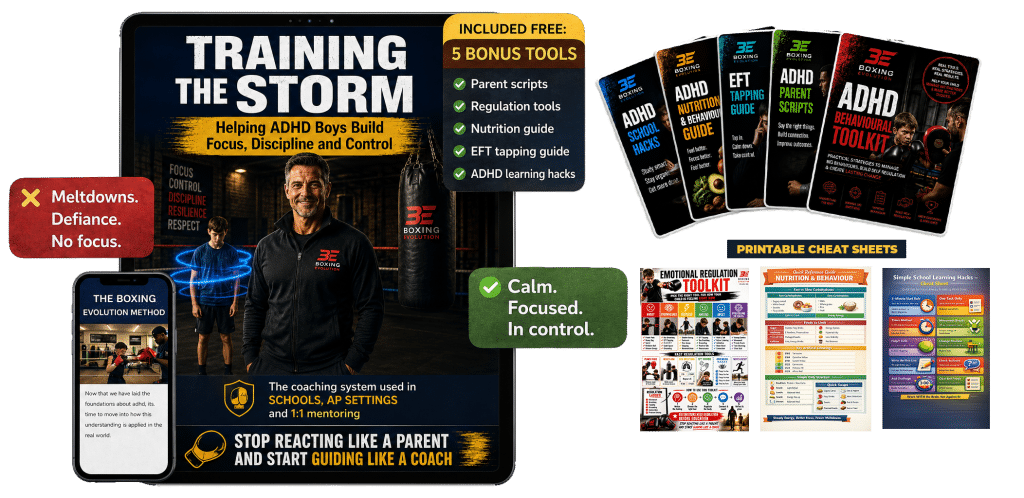
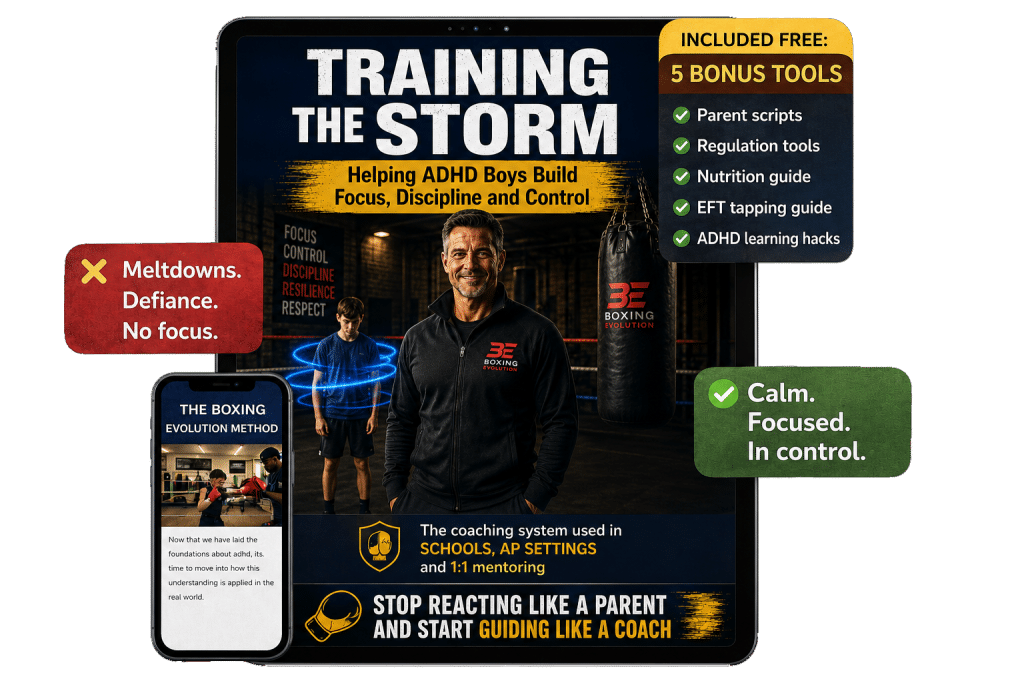
TRAINING THE STORM
A Powerful Boxing-Based ADHD Parenting Guide
Inside the guide you will discover:
- How sports coaching principles transform parenting — Apply leadership, structure and skill development instead of constantly reacting to behaviour..
- The unconscious ways parents surrender leadership authority — Discover the everyday patterns that accidentally put your child in control of the dynamic.
- Why emotional regulation is the real battleground in ADHD — Understand what drives meltdowns, defiance and seemingly irrational behaviour.
- How to train emotional regulation — Practical coaching tools to help your child handle frustration, setbacks and strong emotions.
- How to set boundaries without becoming harsh or controlling — Lead with calm authority while reducing arguments, negotiation and power struggles.
- What to do in the moment when things kick off — Simple strategies and scripts for responding without getting dragged into the chaos.
- Why consequences alone often fail with ADHD — Learn when behaviour needs correcting and when the underlying skill needs developing.
- And much, much more — From school and nutrition strategies to communication, emotional regulation and practical tools for everyday ADHD life.
If you’re tired of “quick fixes”, constant battles and parenting advice that doesn’t seem to work with ADHD, then Training the Storm gives you a different approach.
STOP REACTING LIKE A PARENT AND START GUIDING LIKE A COACH
Think of Training the Storm as your parenting coaching blueprint: helping you understand what drives ADHD behaviour, reclaim your leadership role, and apply proven coaching principles to develop emotional regulation, focus, resilience and self-control.
EOTAS must not be used to conceal shortages
Decision-makers must distinguish between EOTAS being appropriate because of the child’s needs and EOTAS being used because suitable local provision is unavailable.
A shortage of school places must not be presented as evidence that EOTAS is inherently in the child’s best interests. Equally, a child should not be placed into an unsuitable school merely to reduce EOTAS numbers.
Each decision should record:
why EOTAS is considered appropriate;
what outcomes it is intended to achieve;
which reasonable adjustments or school-based options were considered;
why available settings cannot currently meet need;
whether local capacity influenced the decision.
Where EOTAS is required partly because suitable provision is unavailable, the local authority should record that separately and remain accountable for addressing the gap.
Reintegration should be individual, gradual and reversible
Reintegration into school or further education may be a positive outcome for some children and young people. It should not be treated as the automatic measure of success for everyone receiving EOTAS.
Effective planning must be based on demonstrated readiness, not an arbitrary timescale. It should consider the child’s views, previous experiences, relationships, confidence, emotional regulation, tolerance of attendance, response to challenge and engagement with learning.
The receiving setting must confirm that the required staffing, reasonable adjustments, pastoral support and safe spaces are in place before attendance increases.
Transitions should normally include:
relationship-building and preparatory visits;
a phased timetable;
overlap with existing provision;
measurable indicators of readiness;
frequent review points;
contingency arrangements;
the option to pause, adapt or reverse the plan.
Existing EOTAS provision should not be withdrawn before the new arrangement is demonstrably sustainable. A setback should not be treated as failure by the child.
Progress must also be measured more broadly than attendance. Engagement, emotional regulation, confidence, learning, relationships, independence and a sense of belonging all matter.
Families need an effective dispute route
Decisions to refuse, change or cease EOTAS can fundamentally alter a child’s education. Families therefore need more than a general complaints process or an internal review conducted by the same body that made the original decision.
Every decision should be issued in writing and explain:
the evidence considered;
the reasons for the decision;
the proposed alternative;
when the change will take effect;
how and when it can be challenged.
Families should have access to independent mediation followed, where necessary, by an independent appeal route capable of considering whether EOTAS remains necessary and whether the proposed alternative can meet need.
Existing provision should normally remain in place while the dispute is resolved unless there is an immediate and evidenced safeguarding concern. Otherwise, a successful arrangement may be removed before the family has any effective remedy.
Independent advocacy should also be available. Parents should not need specialist legal knowledge to protect their child from an unsuitable or poorly planned change.
Existing arrangements require stability
Children and young people already receiving successful EOTAS provision should not face automatic disruption simply because a new system is introduced.
Younger children may benefit from a comprehensive assessment at key transition points because their development, needs and available options can change significantly. However, older children and young people whose arrangements are stable should not undergo a full reassessment solely for administrative reasons.
A full reassessment should be triggered by materially changed needs, evidence that outcomes are not being achieved, a request from the child or family, or a proposed significant change. Routine review should continue without beginning from a presumption that EOTAS must end.
If a child does not qualify for an EHCP or Specialist Provision Package under a future system, support should not disappear overnight. The assessment should produce a written plan identifying needs, provision, funding, responsible organisations, outcomes and review dates. Existing support should continue until a suitable replacement is confirmed and ready.
Supporting children absent because of health needs
Children whose physical or mental health prevents school attendance can spend prolonged periods without suitable education because responsibility between schools, local authorities and health services is unclear.
The DfE consultation recognised uncertainty around who should fund support, what adjustments should be attempted and when local-authority responsibility begins. It also noted that, where it is clear a child will be absent because of health needs for 15 days or more—consecutively or cumulatively—the local authority should arrange suitable alternative provision.
A clearer pathway should assign each body a defined role:
Schools should identify concerns, implement reasonable adjustments, remain connected to the child and refer promptly when participation continues to deteriorate.
Health services should provide timely advice about the functional impact of the child’s condition and appropriate adjustments. A completed diagnosis should not become the only acceptable evidence of need.
Local authorities should provide one clear referral route, decide when their section 19 duty is engaged, fund suitable provision and coordinate the wider plan.
Disagreement between organisations must not leave the child without education. Interim support should begin while agencies resolve responsibility.
Where return to school becomes appropriate, the process should acknowledge that recovery from physical or mental ill health may fluctuate. The child should retain a connection with the school, while alternative provision overlaps with a gradual return and remains available if health deteriorates.
Online education requires accountability and flexibility
Online alternative provision can preserve access to learning when a child cannot attend in person. However, duration should be determined by individual circumstances rather than a rigid national limit or an open-ended arrangement without review.
Every placement should have a clear purpose, intended outcomes, review dates and progression plan. Reviews should consider academic progress, wellbeing, engagement, social connection and whether greater in-person participation would benefit the child.
Children receiving online alternative provision should normally remain on the register of a school or another accountable educational setting. That setting should continue to monitor progress, coordinate the wider package and maintain contact with the family.
Remaining registered must not lead to inappropriate attendance penalties or create a presumption that the previous school is necessarily the correct long-term placement. The purpose is continuity and accountability, not administrative control.
From policy to practice: what local commissioning must get right
Recent local-authority provider engagement has reinforced a crucial lesson: national policy can describe the intended outcome, but local commissioning determines whether support is actually available.
Moving from informal provider lists towards formal frameworks may improve transparency and oversight. It can also create new barriers if the framework is inaccessible to small providers, remains closed for several years or relies on repeated competitions weighted mainly towards price.
Local commissioning systems therefore need to provide:
genuine pre-market engagement with providers, schools and families;
market mapping across prevention, time-limited intervention and longer-term provision;
suitable categories for different provider models;
objective and published entry criteria;
proportionate requirements for SMEs and sole traders;
transparent referral and provider-selection rules;
recurring opportunities to join the market;
searchable information about provider specialisms and availability;
monitoring based on agreed outcomes;
continuity arrangements when frameworks or contracts change.
Transparency is necessary, but engagement must be more than procedural. Authorities should be able to show how feedback affected the final design and how their framework maintains a sufficiently diverse market to meet children’s individual needs.
Our recommendations for EOTAS reform
Boxing Evolution’s consultation response can be summarised through twelve recommendations:
Provide support according to functional need without requiring diagnosis, EHCP or crisis first.
Establish nationally understood early-intervention triggers, responsibilities and response times.
Create a graduated pathway linking identification, assessment, funding, intervention and review.
Share EOTAS responsibility between the local authority and named setting, with each role recorded clearly.
Introduce proportionate national standards that recognise specialist providers delivering part of a wider package.
Separate independent provider accreditation from local decisions about individual placement suitability.
Make provider approval portable wherever possible and maintain open, fair routes into local markets.
Ensure commissioning frameworks support SMEs, sole traders and varied delivery models.
Measure value across the child’s full pathway rather than using the lowest session price as the main test.
Make reintegration individual, gradual, supported and reversible.
Give families an accessible independent route to challenge decisions about EOTAS.
Protect continuity for children whose existing arrangements are working.
Conclusion
The growth in EOTAS should not be treated only as a problem located within EOTAS. It is also evidence of what has happened earlier in the child’s journey: unmet need, delayed action, unsuitable placements, unclear accountability and missing local capacity.
Reform must therefore begin before crisis.
The strongest EOTAS system will not be the one that simply restricts eligibility or increases regulation. It will be the one that identifies need early, provides a clear route to proportionate support, maintains a diverse and accountable provider market, measures meaningful outcomes and protects children from abrupt or unsuitable transitions.
Early intervention is not merely an educational technique. It is a system-design and commissioning responsibility.
ADHD Parent Support Library
Explore our articles, insights and practical strategies for supporting children with ADHD. Choose a section below to find the topics most relevant to you and your child.

DOWNLOAD THE FREE PDF BY REGISTERING BELOW.


elpatrullero777 is cool. Seems like it is fairly similar to other sites, but it loads so easily. This alone is worth it when compared to the alternatives. Be safe and check it out elpatrullero777, and you won’t be let down!
eegkfoqtjsvdhrqzizojfwntumvgdu
Hi,how are you
Its Amazing
If you are mad at me, just curse me out
HI,I AM HERE AGAIN AND AGAIN