
ADHD
The Great ADHD Myth: Is ADHD Real the Question We Should Be Asking?
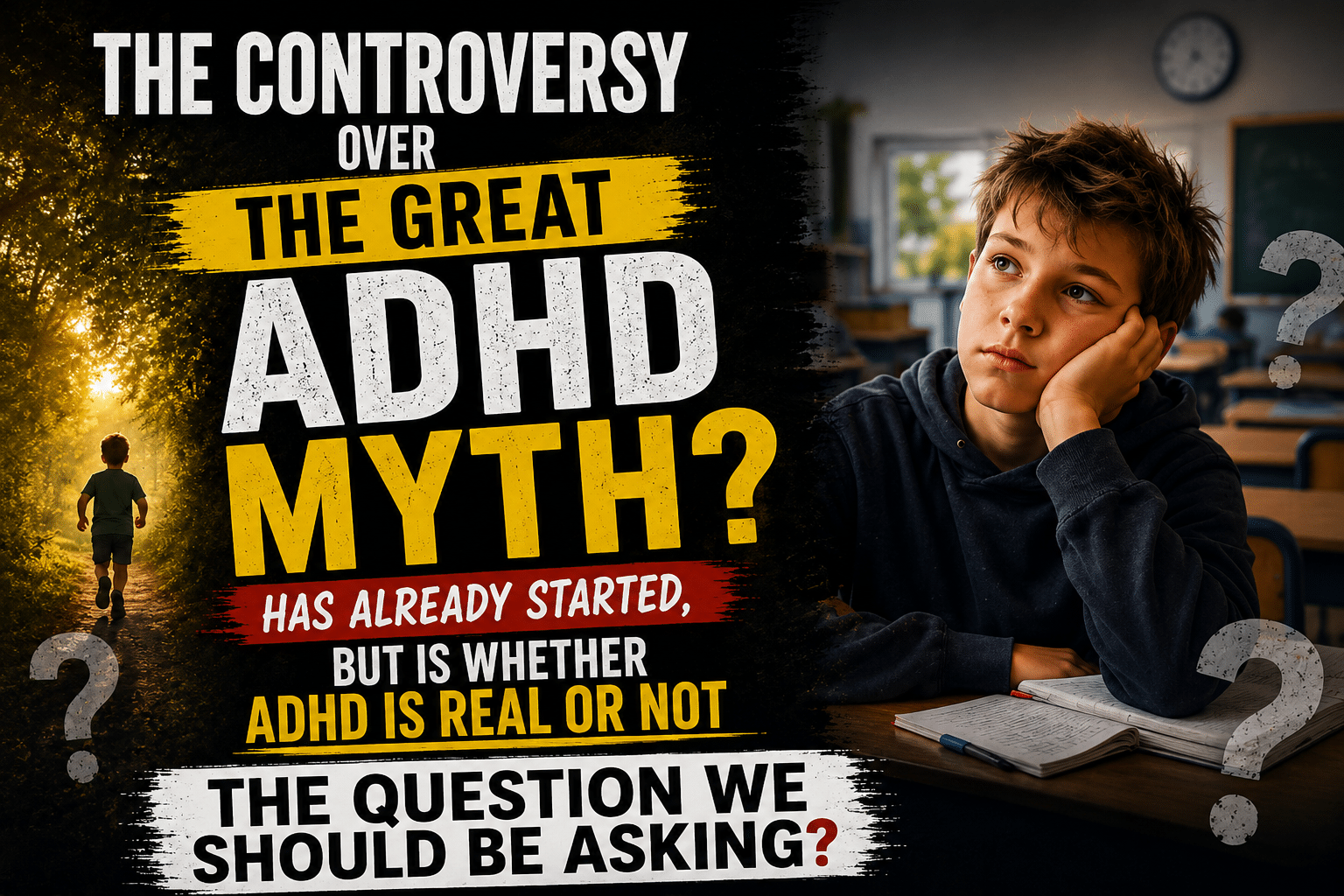
Channel 4’s The Great ADHD Myth? has just aired and, unsurprisingly, the controversy has already started.
The programme questioned some of the fundamental assumptions surrounding ADHD: whether it should be considered a neurodevelopmental disorder, whether normal variations in human behaviour are increasingly being medicalised, how subjective the diagnostic process can be, and whether medication is sometimes being used to help children conform to environments that were never particularly well suited to them in the first place.
Those are uncomfortable questions, particularly for people whose ADHD diagnosis has helped them understand difficulties they may have experienced throughout their lives. But I also don’t think we should be afraid of asking difficult questions simply because the answers might be uncomfortable.
At the same time, I think the programme sometimes went too far in the opposite direction.
The debate is quickly becoming divided between people saying “ADHD isn’t real” and people arguing that questioning the established understanding of ADHD is dangerous.
I think both positions risk missing a much more useful question.
Rather than simply asking whether ADHD is real, perhaps we should be asking: how much of the problem exists within the child, and how much is created by the environment we expect that child to function in? (AKA The Education System) – Learn more about the Hidden History of the Education System and why this is relevant.
That question became particularly interesting through the documentary’s experience with 10-year-old Mason.

First allow me to introduce myself. I’m Matt Flavell, the founder of Boxing Evolution Ltd, where for over 15 years, I’ve dedicated myself to reshaping 1000’s of people’s lives helping them reach their full potential, through the power of boxing, underpinned by teaching the psychology of success and mentorship.
What The Great ADHD Myth? actually questioned
Presented by psychiatrist Dr Max Pemberton, The Great ADHD Myth? challenged the increasingly medicalised understanding of difficulties involving attention, impulsivity and hyperactivity. The programme questioned the diagnostic process, the growth in ADHD diagnosis and medication, and whether ADHD should primarily be understood as a medical problem at all.
The documentary has subsequently generated considerable criticism from ADHD organisations and others who argue that its framing risks undermining a recognised condition. However, disagreement with the programme’s conclusions shouldn’t prevent us from examining some of the questions it raised.
One of the strongest was also one of the simplest: human characteristics exist on a spectrum.
Some people are naturally more active than others. Some find repetitive tasks considerably more difficult. Some are more impulsive, emotionally reactive or novelty-seeking. Some can sit at a desk concentrating for hours, while others function far better when moving, interacting or solving practical problems.
At what point does variation become disorder?
The usual answer is when those characteristics create significant impairment. But that leads to another question that received far less attention: impairment within what environment?
Do brain scans prove ADHD is a brain disorder?
One of the most controversial parts of the documentary concerned the neuroscience of ADHD.
This is an area where we need to be particularly careful because both sides of the argument can oversimplify what the research actually tells us.
It would be incorrect to say that researchers have found no brain differences associated with ADHD. Large neuroimaging studies have identified small average structural differences when groups of people diagnosed with ADHD are compared with groups without ADHD.
For example, a large ENIGMA analysis involving 1,713 people with ADHD and 1,529 controls found small average differences in the volume of several subcortical brain regions. The differences were most apparent in children.
But this does not mean that scientists can put an individual child into a brain scanner, look at their brain and determine whether they have ADHD.
The differences identified by these studies are statistical differences between groups, with substantial variation between individuals. There is currently no routine brain scan that diagnoses ADHD.
This distinction matters.
Saying “research has identified brain differences associated with ADHD” is reasonable. Saying “we can see an ADHD brain and it is clearly abnormal” would be a considerable exaggeration of what the evidence currently demonstrates.
Equally, however, the absence of a diagnostic brain scan does not prove that ADHD has no biological or neurodevelopmental basis.
The scientific picture is therefore considerably more complicated than either “ADHD brains are fundamentally different” or “there are no brain differences, therefore ADHD isn’t real.”
#Key take away: ADHD is not something this is able to be identified through a brain scan.
Brain imaging of the cortex in ADHD: A coordinated analysis of large-scale clinical and Population-based samples. Read the full study here.
Are we pathologising normal human variation?
This was perhaps the most interesting philosophical argument raised by the documentary.
Attention, impulsivity, emotional intensity and activity level aren’t characteristics that suddenly appear when somebody receives an ADHD diagnosis. They exist throughout the human population.
There isn’t a group of people who possess attention and another group who don’t. There isn’t a group who experience impulsivity while everybody else possesses perfect impulse control.
We all exist somewhere along these continua.
A diagnosis therefore requires clinicians to determine when a collection of characteristics has become sufficiently persistent and impairing to warrant being considered a disorder.
That inevitably introduces a degree of judgement.
This doesn’t mean the impairment isn’t real. A child can genuinely struggle with attention, impulse control, emotional regulation and organisation to an extent that significantly affects their life.
But it does mean we should be careful about automatically interpreting every difference from the expected norm as evidence that something is fundamentally wrong with the child.
The environment matters too.
Mason was happier in some ways — but struggled in others
Mason’s experience was probably the most valuable part of The Great ADHD Myth? because the outcome wasn’t particularly convenient for either side of the argument.
During the programme, Mason temporarily stopped taking his ADHD medication while several aspects of his lifestyle were changed. His screen use was dramatically reduced, his diet changed, he spent considerably more time outdoors and he began practising yoga.
Something else happened that I think deserves much more attention.
His family started doing more things together.
Rather than Mason spending large amounts of time independently engaging with a screen, the family were playing games and interacting with each other.
That isn’t simply a question of screen time.
It is a change from predominantly solitary stimulation to shared engagement and connection with other people.
Reports surrounding the programme described Mason as happier and more sociable during parts of this period, while his social relationships appeared to improve. At the same time, however, his concentration and behaviour at school deteriorated.
Eventually Mason became frustrated because he wasn’t performing as well academically, and two months later the programme revealed that he had returned to medication.
That outcome matters because it prevents us from drawing the simplistic conclusion that Mason demonstrated either that medication works or that medication is unnecessary.
Both things were happening simultaneously.
He appeared to benefit in some areas without medication while functioning worse in another extremely important area of his life.
And the environment in which the biggest difficulty emerged was school.
Is there a problem with the child — or the education system?
This is the question I was left asking after watching the documentary.
Think about what we require from children throughout a conventional school day.
We expect them to sit down for extended periods, inhibit their desire to move, direct their attention towards subjects selected by somebody else, follow sequences of instructions, tolerate boredom and delay, organise themselves and demonstrate what they have learned through relatively standardised methods.
For many children these demands are manageable.
For a child who already struggles to regulate attention, impulses, frustration and activity levels, however, that environment can repeatedly expose their weakest areas.
The child struggles to maintain attention. They don’t complete the work. An adult redirects them. They become frustrated. Their emotional regulation deteriorates. Their behaviour then becomes the focus. They receive another correction and become even more frustrated.
What began as difficulty regulating attention can therefore develop into an entire behavioural cycle.
This doesn’t mean that schools cause ADHD, nor does it mean that children shouldn’t be expected to develop the ability to concentrate on things they don’t particularly enjoy.
But it does raise a legitimate question about whether our education system unnecessarily amplifies some children’s difficulties.
NICE itself recognises the importance of environmental modifications for people diagnosed with ADHD. Its guidance gives examples including shorter periods of focus, movement breaks, reducing distractions and changes to the educational environment. For children aged five and over, NICE recommends medication when ADHD symptoms continue to cause persistent significant impairment after environmental modifications have been implemented and reviewed.
So environment versus biology is already something of a false choice.
Is being easier to teach necessarily the same as doing better?
One of the most thought-provoking parts of Mason’s story came from his school.
His teachers could see a difference when he wasn’t taking medication. He found it harder to concentrate and complete his work and, from the school’s perspective, he functioned better academically when medicated.
But the programme also presented another side of Mason. Without medication he appeared livelier and more socially engaged.
This creates an uncomfortable question.
When medication makes a child easier to teach, is that necessarily the same thing as improving the child’s life?
We shouldn’t jump to the opposite conclusion either.
It would be unfair to suggest that Mason was only taking medication for the convenience of adults. Mason himself became frustrated when he realised he wasn’t performing as well academically.
Being able to learn, achieve and experience competence mattered to him.
The real question therefore isn’t whether academic performance or emotional wellbeing matters more.
Both matter.
The challenge is creating circumstances in which children don’t have to sacrifice one in order to achieve the other.
What if some children simply need to learn differently?
One of the contributors to the documentary, Dr Iona Heath, argued for an education system containing considerably more creative, sporting and artistic opportunities.
This particularly resonated with me because I have spent more than 15 years coaching young people, including many children who have struggled within conventional educational environments.
Put some of these children behind a desk with a worksheet and maintaining their attention can become an enormous challenge.
Put the same child into a boxing gym and ask them to learn a combination, calculate the weight they’re lifting, beat their previous performance or solve a practical problem and you can sometimes see a completely different level of engagement.
The child hasn’t suddenly acquired a different brain.
The task and environment have changed.
Sport provides movement, immediate feedback, clear goals, short periods of concentration, consequences, challenge and constant interaction between action and outcome.
This doesn’t prove that ADHD is caused by education.
It does demonstrate why we need to distinguish between a child’s underlying difficulties and the extent to which a particular environment exposes those difficulties.
But I think The Great ADHD Myth? missed something important
This is also where I disagree with an important part of the documentary’s experiment with Mason.
A great deal was changed around him.
His diet changed. His screen time was reduced. He spent more time outdoors. His family became more engaged in shared activities and he was introduced to yoga.
Mason himself said that yoga helped him relax and remain calm.
Those are potentially valuable changes.
But reducing the things that contribute to dysregulation isn’t the same as teaching a child how to regulate themselves when dysregulation inevitably occurs.
There appeared to be relatively little focus in the programme on actively developing Mason’s emotional regulation, frustration tolerance, impulse control, persistence or ability to direct his attention when something became difficult.
That became particularly significant when his academic performance started deteriorating.
Mason became frustrated because he couldn’t perform as well.
For me, that was one of the most important moments in the entire programme, because frustration was precisely the point at which another intervention could have been explored.
Not simply medication.
Not simply accommodation.
Coaching and skill development.
What would have happened if Mason had actually been trained?
This is the experiment I would have loved to see alongside the one shown in The Great ADHD Myth?
What would have happened if Mason’s reduced screen time, greater outdoor activity, family engagement and improved lifestyle had been combined with several weeks of structured coaching designed specifically to develop emotional regulation and frustration tolerance?
What if physical activity hadn’t simply been treated as an opportunity to burn energy, but as an environment in which regulation itself could be practised?
What if somebody had deliberately created achievable challenges, allowed Mason to experience frustration and then coached him through the process of recognising, regulating and overcoming it?
Would that have eliminated his difficulties?
We don’t know.
It would be irresponsible to claim that it would.
But we also don’t know what Mason might have developed because that wasn’t really the intervention being tested.
How To Transform Your Challenging ADHD son into a focussed calm kid... without harsh discipline or relying solely on medication
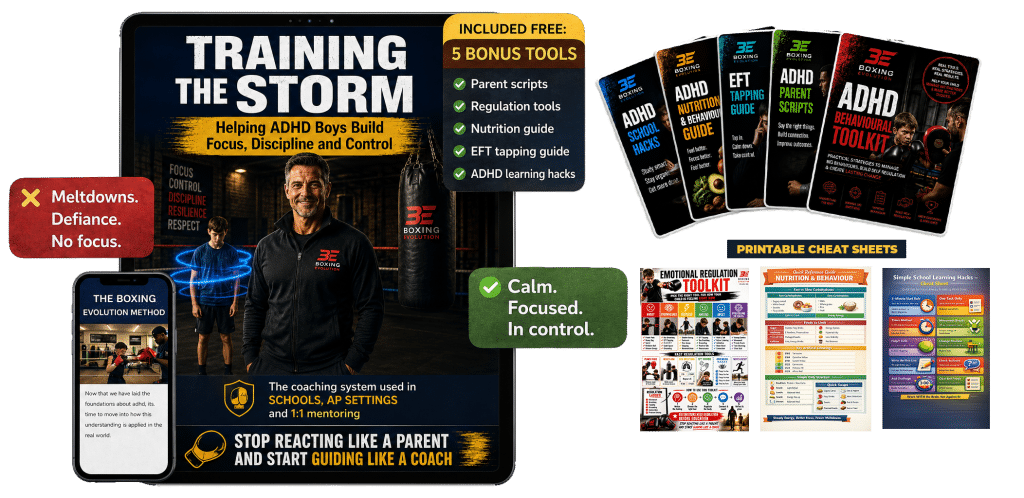
TRAINING THE STORM
A Powerful Boxing-Based ADHD Parenting Guide
Inside the guide you will discover:
- How sports coaching principles transform parenting — Apply leadership, structure and skill development instead of constantly reacting to behaviour..
- The unconscious ways parents surrender leadership authority — Discover the everyday patterns that accidentally put your child in control of the dynamic.
- Why emotional regulation is the real battleground in ADHD — Understand what drives meltdowns, defiance and seemingly irrational behaviour.
- How to train emotional regulation — Practical coaching tools to help your child handle frustration, setbacks and strong emotions.
- How to set boundaries without becoming harsh or controlling — Lead with calm authority while reducing arguments, negotiation and power struggles.
- What to do in the moment when things kick off — Simple strategies and scripts for responding without getting dragged into the chaos.
- Why consequences alone often fail with ADHD — Learn when behaviour needs correcting and when the underlying skill needs developing.
- And much, much more — From school and nutrition strategies to communication, emotional regulation and practical tools for everyday ADHD life.
If you’re tired of “quick fixes”, constant battles and parenting advice that doesn’t seem to work with ADHD, then Training the Storm gives you a different approach.
STOP REACTING LIKE A PARENT AND START GUIDING LIKE A COACH
Think of Training the Storm as your parenting coaching blueprint: helping you understand what drives ADHD behaviour, reclaim your leadership role, and apply proven coaching principles to develop emotional regulation, focus, resilience and self-control.
Medication or environment is the wrong choice
This is ultimately where I think the ADHD debate becomes unnecessarily polarised.
We are repeatedly presented with two competing explanations.
Either ADHD is a biological disorder within the child that needs medical treatment, or the child is simply different and society needs to accommodate them.
I don’t think those possibilities need to be mutually exclusive.
A child can have genuine individual differences that make attention and regulation considerably more difficult and be placed into an environment that unnecessarily magnifies those difficulties.
We can make appropriate accommodations and develop skills.
Medication may provide substantial benefits for some children and medication doesn’t teach every skill that child will eventually need.
Indeed, NICE’s current guidance already reflects some of this complexity. It recommends environmental modifications and ADHD-focused support alongside consideration of medication where significant impairment persists, rather than presenting medication as the only possible response.
Perhaps the biggest mistake in the ADHD debate is believing that we have to choose between biology and environment.
So, is ADHD real?
I think that question is much less useful than it initially appears.
The difficulties experienced by people diagnosed with ADHD are clearly real. Children genuinely struggle with attention, impulse control, organisation, activity regulation and, for many, emotional regulation. Those difficulties can have serious consequences for education, relationships and everyday life.
The more interesting question is what we do about them.
Instead of becoming trapped in an argument between “ADHD brains need medication” and “there’s nothing wrong with these children, society needs to change,” perhaps we should be asking something more practical.
How can we create educational environments that allow different kinds of children to succeed while simultaneously helping those children develop the skills they need to manage themselves?
That means looking at physical activity.
It means looking at how children learn.
It means looking at screen use, relationships, family engagement, sleep, nutrition and the environment surrounding the child.
It means making reasonable accommodations where they’re genuinely needed.
But it also means recognising that children are capable of development.
We shouldn’t simply ask how we suppress difficult behaviour, nor should we accommodate every difficulty indefinitely.
We should ask:
What can we teach this child today that helps them become better able to manage themselves tomorrow?
For me, that’s the ADHD conversation worth having.
ADHD Parent Support Library
Explore our articles, insights and practical strategies for supporting children with ADHD. Choose a section below to find the topics most relevant to you and your child.
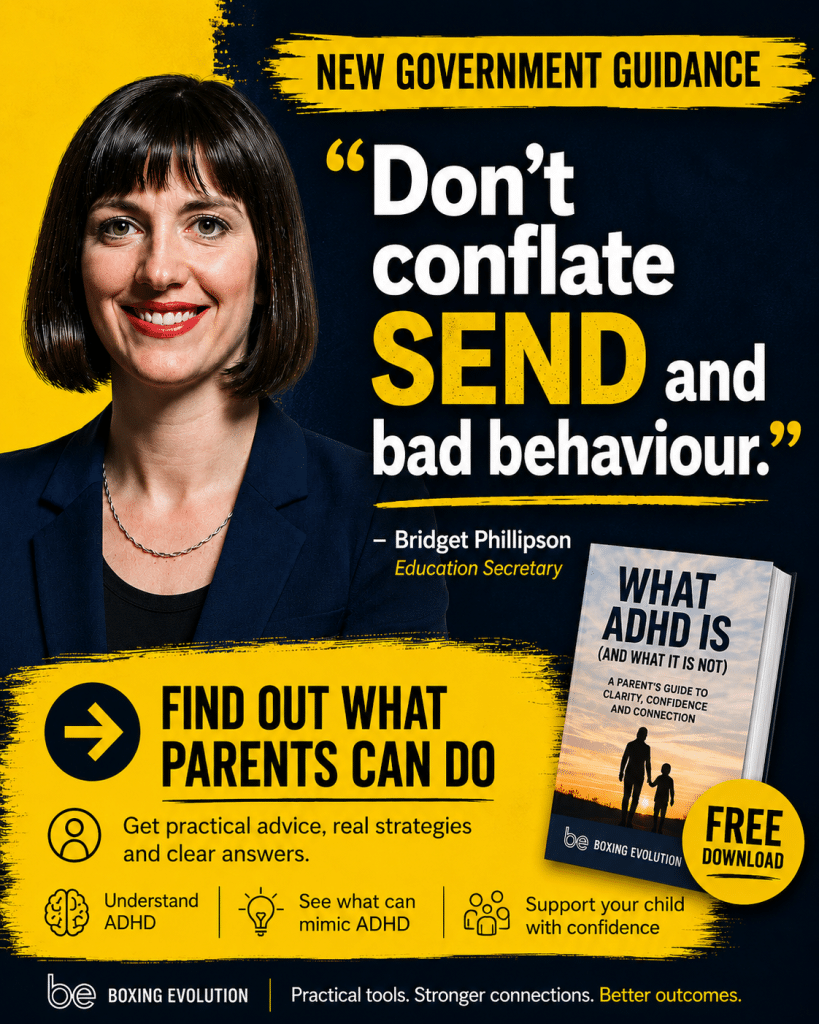
DOWNLOAD THE FREE PDF BY REGISTERING BELOW.


Сайты для взрослых призваны служить средством интимного просвещения, а также поддержкой в осознании личных желаний.
Подобные сервисы дают возможность пользователям познавать собственные границы в контролируемой среде, уменьшая риски фактических последствий.
порно рассказы зрелые
Для партнёров совместное ознакомление подобных материалов способно укреплять взаимопонимание и служить причиной для честного разговора о желаниях и рамках.
Помимо этого эти сайты обеспечивают шанс для безрисковой разрядки напряжения и снятия стресса, не причиняя ущерба другим.
Эти ресурсы 18+ призваны выступать средством сексуального просвещения.
Такие платформы помогают людям в приватной обстановке исследовать собственные желания и интересы.
ии девушка на русском
Для пар совместный интерес способен служить причиной для доверительного беседы о желаниях.
Также подобные сайты помогают снимать внутреннее напряжение и сохранять психическое равновесие.